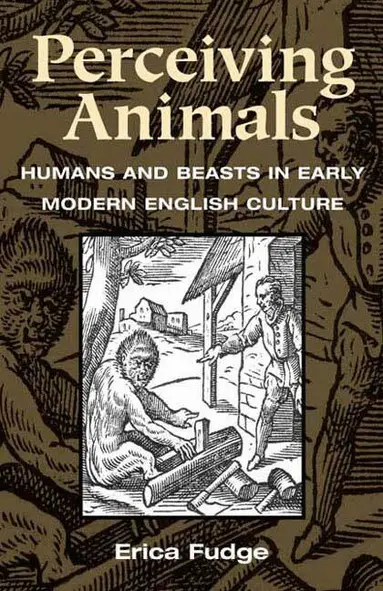
Perceiving Animals
- Vikt 0,31 kg
355 kr356 kr−0% senaste veckanhos Bokus · exkl. frakt
Jämfört med det lägsta pris vi sett de 30 dagarna före sänkningen.
104 kr skillnad mellan billigaste och dyraste butik i lager
Dubbelkollat idag
Jämför 2 butiker
- Bokus, 355 kr, frakt enligt butiken. Till butik (öppnas i ny flik)
I lagerFrakt: se butikenDubbelkollad 05:51
355 kr
Lägst
- Akademibokhandeln, 459 kr, frakt enligt butiken. Till butik (öppnas i ny flik)
I lagerFrakt: se butikenDubbelkollad 05:53
459 kr

Priser från butikernas flöden kan ha ändrats: det är priset hos butiken som gäller, så kontrollera det innan du handlar.
Prishistorik
Köp nu eller vänta?
Just nu kostar produkten 355 kr — 57 kr över det lägsta vi sett på 1 månad.
Under den tiden har det oftast legat runt 350–360 kr.
Pris idag
355 kr
- Lägst
- 298 kr
- Snitt
- 350 kr
- Högst
- 359 kr
| 2026-09-15 | 298 kr · Lägst hos Bokus |
|---|---|
| 2026-09-18 | 300 kr · Lägst hos Bokus |
| 2026-09-20 | 354 kr · Lägst hos Bokus |
| 2026-09-27 | 353 kr · Lägst hos Bokus |
| 2026-09-30 | 354 kr · Lägst hos Bokus |
| 2026-10-02 | 356 kr · Lägst hos Bokus |
| 2026-10-03 | 357 kr · Lägst hos Bokus |
| 2026-10-10 | 358 kr · Lägst hos Bokus |
| 2026-10-11 | 357 kr · Lägst hos Bokus |
| 2026-10-13 | 356 kr · Lägst hos Bokus |
| 2026-10-16 | 357 kr · Lägst hos Bokus |
| 2026-10-22 | 356 kr · Lägst hos Bokus |
| 2026-10-28 | 359 kr · Lägst hos Bokus |
| 2026-10-30 | 358 kr · Lägst hos Bokus |
| 2026-11-01 | 355 kr · Lägst hos Bokus |
Om produkten
Perceiving Animals
Läs merLäs mindre
The boundaries between human and beast forged a rugged philosophical landscape across early modern England. Spectators gathered in London's Bear Garden to watch the callous and brutal baiting of animals. A wave of "new" scientists performed vivisections on live animals to learn more about the human body. In Perceiving Animals, the British scholar Erica Fudge traces the dangers and problems of anthropocentrism in texts written from 1558 to 1649. Meticulous examinations of scientific, legal, political, literary, and religious writings offer unique and fascinating depictions of human perceptions about the natural world. Views carried over from bestiaries--medieval treatises on animals--posited animals as nonsentient beings whose merits were measured solely by what provisions they afforded humans: food, medicine, clothing, travel, labor, scientific knowledge. Without consciences or faith, animals were deemed far inferior to humans. While writings from the period asserted an enormous biological superiority, Fudge contends actual human behavior and logic worked, sometimes accidentally, to close the alleged gap. In the Bear Garden, even a man of the lowest social rank had power over a tortured animal, sinking him, though, below the beasts. The beast fable itself fails to show a true understanding of animals, as it merely attributes human characteristics to beasts in an attempt to teach humanist ideals. Scholars and writers continually turned to the animal world for reflection. Despite this, scientists of the period used animals for empirical and medical knowledge, recognizing biological and spiritual similarities but refusing to renege human superiority. Including an insightful reexamination of Ben Jonson's Volpone and fascinating looks at works by Francis Bacon, Edward Coke, and Richard Overton, among others, Fudge probes issues of animal ownership and biological and spiritual superiority in early modern England that resonate with philosophical quandaries still relevant in contemporary society.
Specifikationer
Fakta
- Vikt
- 0,31 kg
- GTIN
- 09780252070686
Uppgifter från tillverkare och butiker.