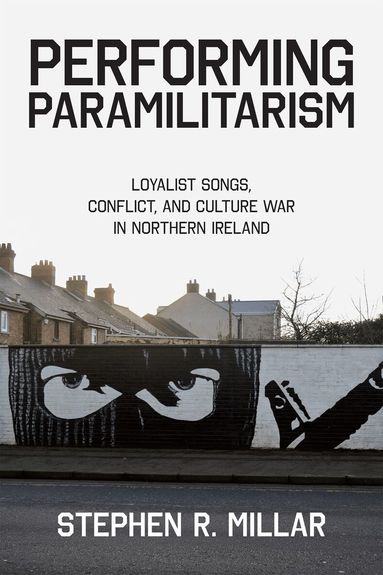
Performing Paramilitarism
- Vikt 0,35 kg
345 krhos Bokus · exkl. frakt
104 kr skillnad mellan billigaste och dyraste butik i lager
Dubbelkollat idag
Jämför 2 butiker
- Bokus, 345 kr, frakt enligt butiken. Till butik (öppnas i ny flik)
I lagerFrakt: se butikenDubbelkollad 02:51
345 kr
Lägst
- Akademibokhandeln, 449 kr, frakt enligt butiken. Till butik (öppnas i ny flik)
I lagerFrakt: se butikenDubbelkollad 01:53
449 kr

Priser från butikernas flöden kan ha ändrats: det är priset hos butiken som gäller, så kontrollera det innan du handlar.
Prishistorik
Köp nu eller vänta?
Pris idag
345 kr
- Lägst
- 345 kr
- Snitt
- 355 kr
- Högst
- 449 kr
| 2026-10-08 | 449 kr · Lägst hos Akademibokhandeln |
|---|---|
| 2026-10-09 | 345 kr · Lägst hos Bokus |
Om produkten
Performing Paramilitarism
Läs merLäs mindre
During Northern Ireland's 'Troubles' (1969-98), paramilitary groups were supported and sustained by a sociocultural apparatus that helped legitimise their position within the community and disseminate their political message. From the use of flags and murals to loyalist and republican parades, working-class vernacular culture revealed who controlled various districts of the Province. For many working-class Protestants, loyalist songs were a key component of this culture, connecting the past and the present. Unlike the better-known loyalist marching band scene, the loyalist song scene was--and continues to be--much more private. Performances take place in closed settings such as local loyalist pubs and clubs, where songs are reproduced for internal consumption rather than outward expression.Performing Paramilitarism examines the role that loyalist songs played during the Troubles and why musicians and audiences still produce and consume these songs today. By tracing the connection between loyalist songs and loyalist paramilitaries, the book highlights how these songs feed into a broader 'culture war' in Northern Ireland where, in the absence of intercommunal violence, the commemoration of paramilitary groups is used to continue the conflict by other means. Stephen R. Millar argues that in the wake of Brexit, such songs form part of a cultural nostalgia for multiple and intersecting imagined pasts. These pasts in turn resonate with the rise of populism in other parts of the world and are weaponized to defend against the looming existential threat of a United Ireland.
Specifikationer
Fakta
- Vikt
- 0,35 kg
- GTIN
- 09780197686430
Uppgifter från tillverkare och butiker.