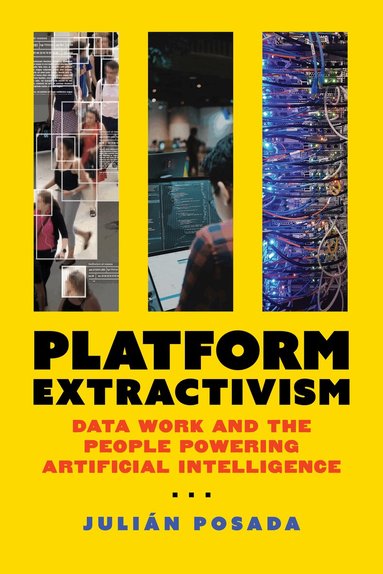
Platform Extractivism
Bra pris nuLägsta priset på 3 veckor
1 479 krhos Bokus · exkl. frakt
440 kr skillnad mellan billigaste och dyraste butik i lager
Dubbelkollat idag
Jämför 2 butiker
- Bokus, 1 479 kr, frakt enligt butiken. Till butik (öppnas i ny flik)
I lagerFrakt: se butikenDubbelkollad 13:51
1 479 kr
Lägst
- Akademibokhandeln, 1 919 kr, frakt enligt butiken. Till butik (öppnas i ny flik)
I lagerFrakt: se butikenDubbelkollad 13:53
1 919 kr

Priser från butikernas flöden kan ha ändrats: det är priset hos butiken som gäller, så kontrollera det innan du handlar.
Prishistorik
Köp nu eller vänta?
Just nu kostar produkten 1 479 kr — det lägsta vi sett på 3 veckor.
Pris idag
1 479 kr
- Lägst
- 1 479 kr
- Snitt
- 1 498 kr
- Högst
- 1 919 kr
| 2026-09-24 | 1 919 kr · Lägst hos Akademibokhandeln |
|---|---|
| 2026-09-25 | 1 479 kr · Lägst hos Bokus |
Om produkten
Platform Extractivism
Läs merLäs mindre
Concealed behind digital platforms, a vast, dispersed, and largely invisible workforce quietly generates and annotates the data that powers today's AI boom. In Platform Extractivism, information scientist Julián Posada argues that these platforms are engines of extraction rooted in the enduring social inequalities and transnational power disparities of coloniality. Posada reveals that technology, especially today's so-called AI, is not artificial, autonomous, or intelligent; it inherently relies on and extracts from humanity. Drawing on mixed-methods research on three platforms in the Venezuelan data work sector, Posada exposes the human cost of this technology, revealing how digital platforms have capitalized on economic instability, targeting vulnerable populations to extract value from their precarious labor. A critical intervention in the debate on the future of work, this book provides profound insight into the implications of artificial intelligence and moves beyond the context of advanced economies to focus on the labor involved in its production. Platform Extractivism questions whether AI is a tool for freedom or a motor driving the widening the gap between the unseen workers who teach machines and the corporations that profit from them.