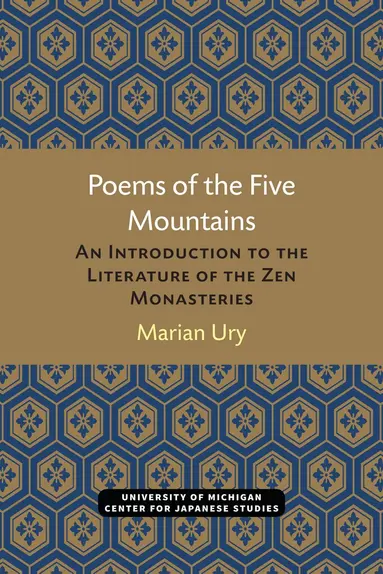
Poems of the Five Mountains
159 krhos Bokus · exkl. frakt
50 kr skillnad mellan billigaste och dyraste butik i lager
Dubbelkollade priser
Jämför 3 butiker
- Bokus, 159 kr, frakt enligt butiken. Till butik (öppnas i ny flik)
I lagerFrakt: se butikenDubbelkollad 00:51
159 kr
Lägst
- Akademibokhandeln, 209 kr, frakt enligt butiken. Till butik (öppnas i ny flik)
I lagerFrakt: se butikenDubbelkollad 00:53
209 kr
- Adlibris, 149 kr plus 35 kr frakt. Till butik (öppnas i ny flik)
Slut i lagerFrakt 35 krDubbelkollad 27 okt. 09:10
149 kr


Priser från butikernas flöden kan ha ändrats: det är priset hos butiken som gäller, så kontrollera det innan du handlar.
Prishistorik
Köp nu eller vänta?
Just nu kostar produkten 159 kr — 10 kr över det lägsta vi sett på 1 månad.
Under den tiden har det oftast legat runt 160 kr.
Pris idag
159 kr
- Lägst
- 149 kr
- Snitt
- 159 kr
- Högst
- 163 kr
| 2026-09-15 | 155 kr · Lägst hos Adlibris |
|---|---|
| 2026-09-17 | 157 kr · Lägst hos Adlibris |
| 2026-09-18 | 159 kr · Lägst hos Bokus |
| 2026-09-22 | 162 kr · Lägst hos Bokus |
| 2026-09-23 | 160 kr · Lägst hos Adlibris |
| 2026-09-24 | 158 kr · Lägst hos Adlibris |
| 2026-09-30 | 158 kr · Lägst hos Bokus |
| 2026-10-05 | 149 kr · Lägst hos Adlibris |
| 2026-10-08 | 159 kr · Lägst hos Bokus |
| 2026-10-11 | 163 kr · Lägst hos Bokus |
| 2026-10-14 | 159 kr · Lägst hos Bokus |
| 2026-10-20 | 163 kr · Lägst hos Bokus |
| 2026-10-26 | 159 kr · Lägst hos Bokus |
Om produkten
Poems of the Five Mountains
Läs merLäs mindre
This second, revised edition of a pioneering volume, long out of print, presents translations of Japanese Zen poems on sorrow, old age, homesickness, the seasons, the ravages of time, solitude, the scenic beauty of the landscape of Japan, and monastic life. Composed by Japanese Zen monks who lived from the last quarter of the thirteenth century to the middle of the fifteenth century, these poems represent a portion of the best of the writing called in Japanese gozan bungaku, "literature of the five mountains." "Five mountains" or "five monasteries" refers to the system by which the Zen monasteries were hierarchically ordered and governed. For the monks in the monasteries, poetry functioned as a means not only of expressing religious convictions and personal feelings but also of communicating with others in a civilized and courteous fashion. Effacing barriers of time and space, the practice of Chinese poetry also made it possible for Japanese authors to feel at one with their Chinese counterparts and the great poets of antiquity. This was a time when Zen as an institution was being established and contact with the Chinese mainland becoming increasingly frequent-ten of the sixteen poets represented here visited China. Marian Ury has provided a short but substantial introduction to the Chinese poetry of Japanese gozan monasteries, and her translations of the poetry are masterful. Poems of the Five Mountains is an important work for anyone interested in Japanese literature, Chinese literature, East Asian Religion, and Zen Buddhism.