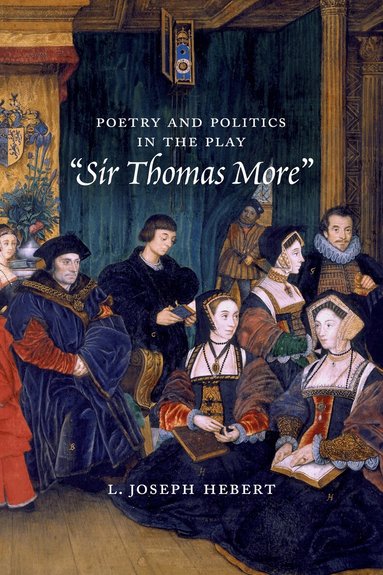
Poetry and Politics in the Play Sir Thomas More
1 102 krhos Bokus · exkl. frakt
327 kr skillnad mellan billigaste och dyraste butik i lager
Dubbelkollat idag
Jämför 2 butiker
- Bokus, 1 102 kr, frakt enligt butiken. Till butik (öppnas i ny flik)
I lagerFrakt: se butikenDubbelkollad 05:51
1 102 kr
Lägst
- Akademibokhandeln, 1 429 kr, frakt enligt butiken. Till butik (öppnas i ny flik)
I lagerFrakt: se butikenDubbelkollad 04:53
1 429 kr

Priser från butikernas flöden kan ha ändrats: det är priset hos butiken som gäller, så kontrollera det innan du handlar.
Prishistorik
Köp nu eller vänta?
Pris idag
1 102 kr
- Lägst
- 1 099 kr
- Snitt
- 1 143 kr
- Högst
- 1 429 kr
| 2026-10-12 | 1 429 kr · Lägst hos Akademibokhandeln |
|---|---|
| 2026-10-13 | 1 099 kr · Lägst hos Bokus |
| 2026-10-16 | 1 105 kr · Lägst hos Bokus |
| 2026-10-18 | 1 102 kr · Lägst hos Bokus |
Om produkten
Poetry and Politics in the Play Sir Thomas More
Läs merLäs mindre
If ever a play had something to say about the art of statesmanship, that play is Sir Thomas More. Its origins and authorship shrouded in mystery, the manuscript was likely written and revised between 1593 and 1604. This carefully crafted and dramatically compelling work pays tribute to a man eminent in philosophy and literature as well as politics, whose brilliant career and violent death revolved around controversies relevant to the turbulent transformations of the Tudor age, and to the subsequent development of modern government and society.Known then and now as "a man for all seasons," More was an accomplished poet, rhetorician, lawyer, diplomat, member of parliament and speaker of the House of Commons, a legal and political advisor to the city of London and King Henry VIII, and finally Chancellor of England. Having established a reputation for moral integrity, fervent piety, and vigorous opposition to both corruption and misguided attempts at reform, More saw his public career come to an abrupt end when he refused to recognize Henry as head of the English Church. In the generations that followed his trial and execution for "high treason," More was hailed by many as a man of wisdom, courage, and good faith-indeed, as "a blessed and happy martyr,"-even as the regime whose foundations he opposed continued to insist upon his error, guilt, and folly.Under the watchful eye of an Elizabethan censor, Sir Thomas More explores questions of profound philosophic and historic significance-questions that remained politically explosive at the time, and that continue to divide authors and audiences today. This book is the first to offer a comprehensive reading of the political and philosophical currents informing the play, including scene by scene summaries of the drama and clarifying synopses of sources referenced in the commentary.