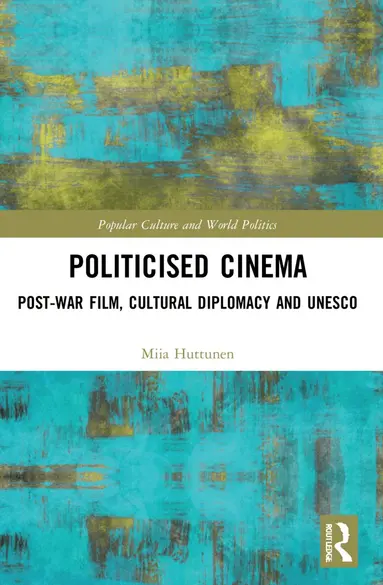
Politicised Cinema
- Vikt 0,42 kg
688 krhos Bokus · exkl. frakt
211 kr skillnad mellan billigaste och dyraste butik i lager
Dubbelkollat idag
Jämför 2 butiker
- Bokus, 688 kr, frakt enligt butiken. Till butik (öppnas i ny flik)
I lagerFrakt: se butikenDubbelkollad 06:51
688 kr
Lägst
- Akademibokhandeln, 899 kr, frakt enligt butiken. Till butik (öppnas i ny flik)
I lagerFrakt: se butikenDubbelkollad 06:53
899 kr

Priser från butikernas flöden kan ha ändrats: det är priset hos butiken som gäller, så kontrollera det innan du handlar.
Prishistorik
Köp nu eller vänta?
Just nu kostar produkten 688 kr — 10 kr över det lägsta vi sett på 1 månad.
Under den tiden har det oftast legat runt 680–690 kr.
Pris idag
688 kr
- Lägst
- 678 kr
- Snitt
- 687 kr
- Högst
- 695 kr
| 2026-09-15 | 685 kr · Lägst hos Bokus |
|---|---|
| 2026-09-17 | 682 kr · Lägst hos Bokus |
| 2026-09-20 | 680 kr · Lägst hos Bokus |
| 2026-09-23 | 681 kr · Lägst hos Bokus |
| 2026-09-25 | 679 kr · Lägst hos Bokus |
| 2026-09-27 | 678 kr · Lägst hos Bokus |
| 2026-09-30 | 680 kr · Lägst hos Bokus |
| 2026-10-02 | 684 kr · Lägst hos Bokus |
| 2026-10-04 | 687 kr · Lägst hos Bokus |
| 2026-10-05 | 688 kr · Lägst hos Bokus |
| 2026-10-08 | 694 kr · Lägst hos Bokus |
| 2026-10-11 | 691 kr · Lägst hos Bokus |
| 2026-10-16 | 692 kr · Lägst hos Bokus |
| 2026-10-18 | 691 kr · Lägst hos Bokus |
| 2026-10-22 | 690 kr · Lägst hos Bokus |
| 2026-10-24 | 692 kr · Lägst hos Bokus |
| 2026-10-28 | 695 kr · Lägst hos Bokus |
| 2026-11-01 | 688 kr · Lägst hos Bokus |
Om produkten
Politicised Cinema
Läs merLäs mindre
Politicised Cinema demonstrates how taking a collection of seemingly apolitical films and using them as an instrument for serving explicit political aims can be used as a force for good.Through an analysis of Orient: A Survey of Films Produced in Countries of Arab and Asian Culture, a film catalogue published by UNESCO and the BFI in 1959 to promote intercultural understanding between the East and the West, this book argues for the importance of studying the ways the interpretation of films can be guided to serve a specific political agenda, even when the films themselves were originally produced with very different aims in mind. The author focuses on how the catalogue positions culture and its cinematic representations as a marker of difference between the Eastern and Western worlds, and shows that even major cultural conflicts such as the Cold War and the decolonisation process can be reframed in service of UNESCO's cultural diplomatic agenda. The book explores the ways in which the catalogue of Eastern films deemed suitable for Western audiences became a weapon to fight against prejudice, intolerance, and bigotry in a politicised battle over dismantling the proclaimed link between difference and conflict.This book will be of interest to students, researchers, and academics in visual politics, cinematic international relations, cultural diplomacy, global governance, and international cultural politics, as well as film studies, Asian studies, and cultural studies. In addition, policymakers and practitioners in the fields of cultural diplomacy and cultural policy will find the empirical case study to be of use in practical work.
Specifikationer
Fakta
- Vikt
- 0,42 kg
- GTIN
- 09781032120058
Uppgifter från tillverkare och butiker.