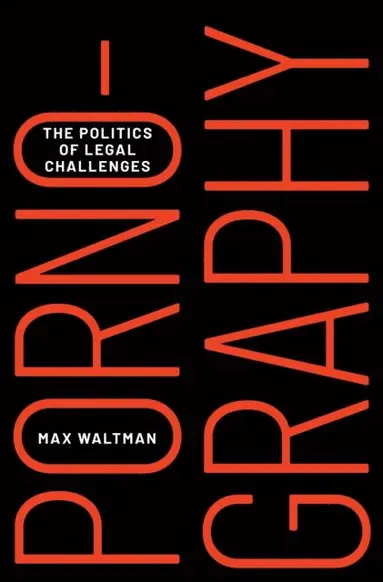
Pornography
Dubbelkollat idag
Jämför 1 butik
- Bokus, 310 kr, frakt enligt butiken. Till butik (öppnas i ny flik)
I lagerFrakt: se butikenDubbelkollad 04:51
310 kr
Lägst

Priser från butikernas flöden kan ha ändrats: det är priset hos butiken som gäller, så kontrollera det innan du handlar.
Prishistorik
Köp nu eller vänta?
Just nu kostar produkten 310 kr — 118 kr över det lägsta vi sett på 1 månad.
Under den tiden har det oftast legat runt 190–310 kr.
Pris idag
310 kr
- Lägst
- 192 kr
- Snitt
- 274 kr
- Högst
- 310 kr
| 2026-09-15 | 300 kr · Lägst hos Bokus |
|---|---|
| 2026-09-29 | 192 kr · Lägst hos Bokus |
| 2026-10-12 | 310 kr · Lägst hos Bokus |
Om produkten
Pornography
Läs merLäs mindre
Pornography has long proven a polarizing and vexing subject in legal and feminist debates. Women''s social movements have fought ferociously against pornography since the 1970s, emphasizing its contribution to violence against women. At least two to four of ten young men consume it three times or more per week. The pornography industry exploits poor populations, who are multiply and intersectionally disadvantaged based on gender, race, or other vulnerabilities. A thorough analytical review of empirical studies using complementing methods demonstrates that using pornography substantially contributes to consumers becoming more sexually aggressive, on average desensitizing them and contributing to a demand for more subordinating, aggressive, and degrading materials. Consumers are also often found wishing to imitate pornography with unwilling partners; many demand sex from prostituted people, who have few or no alternatives. While the supporting scientific evidence of harm is growing exponentially, the politics of legal challenges to pornography still constitutes an amalgam of some of the most intractable, thorny, and adversarial obstacles to change.This book assesses American, Canadian, and Swedish legal challenges to the explosive spread of pornography within their significantly different democratic systems, and constructs a political and legal theory for effectively challenging the sex industry under law. The obstacles to this challenge are exposed as more ideological and political than strictly legal, although they often play out in the legal arena. Legal challenges to the harms are shown to be more effective under legal systems that promote equality and when the laws empower those most harmed, in contrast to state-enforced regulations (e.g., criminal obscenity laws). Drawing on feminist and intersectional theory, among others, this book argues that pornography is among the linchpins of sex inequality, contending that civil rights legislation and a civil society forum can empower those harmed with representatives who have more substantial incentives to address them.This book explains why democracies fail to address the harms of pornography, and offers a political and legal theory for changing the status quo. These insights can be applied to other intractable problems associated with hierarchies, and will appeal profoundly to political theorists and those invested in civil and human rights.