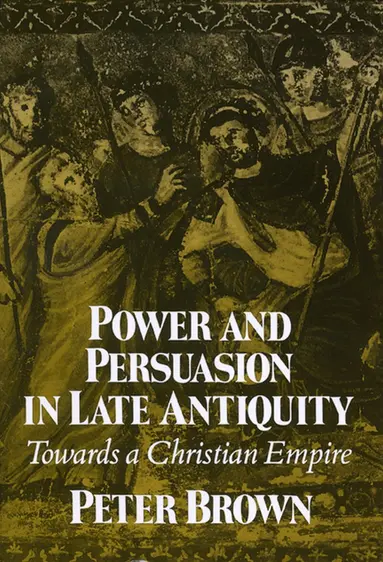
Power and Persuasion in Late Antiquity
- Vikt 0,27 kg
204 krhos Bokus · exkl. frakt
65 kr skillnad mellan billigaste och dyraste butik i lager
Dubbelkollade priser
Jämför 3 butiker
- Bokus, 204 kr, frakt enligt butiken. Till butik (öppnas i ny flik)
I lagerFrakt: se butikenDubbelkollad 08:51
204 kr
Lägst
- Akademibokhandeln, 269 kr, frakt enligt butiken. Till butik (öppnas i ny flik)
I lagerFrakt: se butikenDubbelkollad 08:53
269 kr
- Adlibris, 189 kr plus 35 kr frakt. Till butik (öppnas i ny flik)
Slut i lagerFrakt 35 krDubbelkollad 27 okt. 09:10
189 kr


Priser från butikernas flöden kan ha ändrats: det är priset hos butiken som gäller, så kontrollera det innan du handlar.
Prishistorik
Köp nu eller vänta?
Just nu kostar produkten 204 kr — 15 kr över det lägsta vi sett på 1 månad.
Under den tiden har det oftast legat runt 190–210 kr.
Pris idag
204 kr
- Lägst
- 189 kr
- Snitt
- 198 kr
- Högst
- 206 kr
| 2026-09-15 | 189 kr · Lägst hos Adlibris |
|---|---|
| 2026-10-04 | 203 kr · Lägst hos Bokus |
| 2026-10-05 | 189 kr · Lägst hos Adlibris |
| 2026-10-08 | 206 kr · Lägst hos Bokus |
| 2026-10-10 | 205 kr · Lägst hos Bokus |
| 2026-10-13 | 204 kr · Lägst hos Bokus |
| 2026-10-16 | 205 kr · Lägst hos Bokus |
| 2026-10-22 | 204 kr · Lägst hos Bokus |
| 2026-10-24 | 205 kr · Lägst hos Bokus |
| 2026-10-28 | 206 kr · Lägst hos Bokus |
| 2026-10-30 | 205 kr · Lägst hos Bokus |
| 2026-10-31 | 204 kr · Lägst hos Bokus |
Om produkten
Power and Persuasion in Late Antiquity
Läs merLäs mindre
Peter Brown, a known authority on Mediterranean civilisation in late antiquity, traces the growing power of early Christian bishops as they wrested influence from the philosophers who had traditionally advised the rulers of Graeco-Roman society. In the new ""Christian empire"", the ancient bonds of citizen to citizen and of each city to its benefactors were replaced by a common loyalty to a distant, Christian autocrat. This transformation of the Roman Empire from an ancient to a medieval society, Brown argues, is among the most far-reaching consequences of the rise of Christianity. In the last centuries of the Roman Empire, the power of the emperors depended on collaboration with the local elites. The shared ideals of Graeco-Roman culture (""paideia""), which were inculcated among the elite by their education, acted as unwritten constitution. The philosophers, as representives of this cultural tradition and as critics and advisors of the powerful, upheld the ideals of just rule and prevented the abuses of power. Between the conversion of Emperor Constantine to Christianity in 312 and the reign of Theodosius (379-395), however, both Christian bishops and uneducated monks emerged as competitors to the traditional educated elites. Claiming as Christians to be the ""true philosophers"", they asserted their own role in swaying the emperors to mercy and just rule. Brown shows how charity to the urban poor gave bishops such as Saint Ambrose a novel power base - the restless lower classes of the empire. The lines of power that led from local society to the imperial court increasingly fell into the hands of the church, as clerics exercised their power to ensure the peace in cities, secure amnesties, and convey to the emperor the wishes of his subjects. Brown also points out how churchmen expressed their new local power through violence against rivals: Jewish synagogues and Roman Temples were destroyed, and Hypatia, one of the few women with a public role as a philosopher, was lynched in Alexandria. Brown demonstrates how Christian teaching provided a model for a more autocratic, hierarchial empire: the ancient ideals of democracy and citizenship gave way to the image of a glorious ruler showing mercy to his lowly and grateful subjects. Drawing upon a wealth of material - newly discovered letters and sermons of Saint Augustine, archaeological evidence, manuscripts in Coptic and Syriac - he provides a portrait of a turbulent and fascinating era.
Specifikationer
Fakta
- Vikt
- 0,27 kg
- GTIN
- 09780299133443
Uppgifter från tillverkare och butiker.