Price of Time
Dubbelkollat idag
Jämför 1 butik
- Bokus, 125 kr, frakt enligt butiken. Till butik (öppnas i ny flik)
I lagerFrakt: se butikenDubbelkollad 11:51
125 kr
Lägst

Priser från butikernas flöden kan ha ändrats: det är priset hos butiken som gäller, så kontrollera det innan du handlar.
Prishistorik
Köp nu eller vänta?
Just nu kostar produkten 125 kr — 3 kr över det lägsta vi sett på 1 månad.
Pris idag
125 kr
- Lägst
- 122 kr
- Snitt
- 123 kr
- Högst
- 125 kr
| 2026-09-15 | 122 kr · Lägst hos Bokus |
|---|---|
| 2026-10-12 | 125 kr · Lägst hos Bokus |
Om produkten
The first book of the next crisis
Läs merLäs mindre
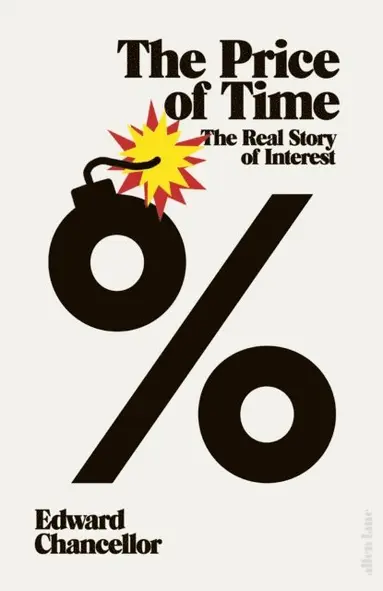
A history of interest rates by a leading financial commentator, updated with a new postscript.*Winner of the 2023 Hayek Book Prize**Longlisted for the 2022 Financial Times Business Book of the Year Award*All economic and financial activities take place across time. Interest coordinates these activities. The story of capitalism is thus the story of interest: the price that individuals, companies and nations pay to borrow money.In The Price of Time, Edward Chancellor traces the history of interest from its origins in ancient Mesopotamia, through debates about usury in Restoration Britain and John Law ' s ill-fated Mississippi scheme, to the global credit booms of the twenty-first century. We generally assume that high interest rates are harmful, but Chancellor argues that, whenever money is too easy, financial markets become unstable. He takes the story to the present day, when interest rates have sunk lower than at any time in the five millennia since they were first recorded - including the extraordinary appearance of negative rates in Europe and Japan - and highlights how this has contributed to profound economic insecurity and financial fragility.Chancellor reveals how extremely low interest rates not only create asset price inflation but are also largely responsible for weak economic growth, rising inequality, zombie companies, elevated debt levels and the pensions crises that have afflicted the West in recent years - conditions under which economies cannot possibly thrive. At the same time, easy money in China has inflated an epic real estate bubble, accompanied by the greatest credit and investment boom in history. As the global financial system edges closer to yet another crisis, Chancellor shows that only by understanding interest can we hope to face the challenges ahead.