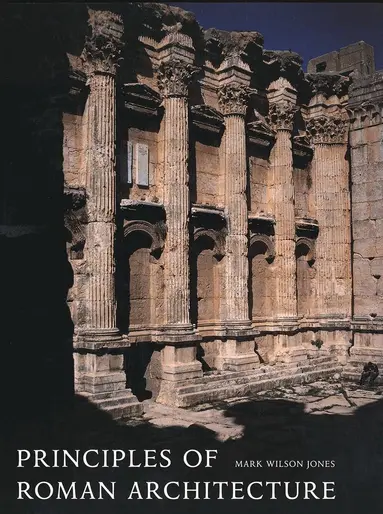
Principles of Roman Architecture
- Vikt 1,11 kg
409 krhos Bokus · exkl. frakt
120 kr skillnad mellan billigaste och dyraste butik i lager
Dubbelkollat idag
Jämför 2 butiker
- Bokus, 409 kr, frakt enligt butiken. Till butik (öppnas i ny flik)
I lagerFrakt: se butikenDubbelkollad 20:51
409 kr
Lägst
- Akademibokhandeln, 529 kr, frakt enligt butiken. Till butik (öppnas i ny flik)
I lagerFrakt: se butikenDubbelkollad 20:53
529 kr

Priser från butikernas flöden kan ha ändrats: det är priset hos butiken som gäller, så kontrollera det innan du handlar.
Prishistorik
Köp nu eller vänta?
Just nu kostar produkten 409 kr — 10 kr över det lägsta vi sett på 1 månad.
Under den tiden har det oftast legat runt 410 kr.
Pris idag
409 kr
- Lägst
- 399 kr
- Snitt
- 407 kr
- Högst
- 413 kr
| 2026-09-15 | 399 kr · Lägst hos Bokus |
|---|---|
| 2026-09-17 | 401 kr · Lägst hos Bokus |
| 2026-09-18 | 402 kr · Lägst hos Bokus |
| 2026-09-20 | 403 kr · Lägst hos Bokus |
| 2026-09-22 | 405 kr · Lägst hos Bokus |
| 2026-09-23 | 403 kr · Lägst hos Bokus |
| 2026-09-26 | 406 kr · Lägst hos Bokus |
| 2026-10-01 | 409 kr · Lägst hos Bokus |
| 2026-10-02 | 410 kr · Lägst hos Bokus |
| 2026-10-07 | 413 kr · Lägst hos Bokus |
| 2026-10-09 | 410 kr · Lägst hos Bokus |
| 2026-10-11 | 411 kr · Lägst hos Bokus |
| 2026-10-13 | 410 kr · Lägst hos Bokus |
| 2026-10-15 | 412 kr · Lägst hos Bokus |
| 2026-10-16 | 410 kr · Lägst hos Bokus |
| 2026-10-19 | 407 kr · Lägst hos Bokus |
| 2026-10-23 | 406 kr · Lägst hos Bokus |
| 2026-10-28 | 409 kr · Lägst hos Bokus |
Om produkten
Principles of Roman Architecture
Läs merLäs mindre
The architects of ancient Rome developed a vibrant and enduring tradition, inspiring those who followed in their profession even to the present day. This original book is the first to explore their approach to design. Mark Wilson Jones draws on both new archaeological discoveries and his own analyzes of the monuments to reveal how Roman architects went about the creative process.Wilson Jones begins by outlining the state of knowledge regarding Roman architects, Vitruvius in particular, as well as the dynamics of design as illuminated by surviving architectural drawings and models. Then, in a series of thematic chapters dedicated to the plan, the elevation, and the principal distributive element of Roman buildings, the Corinthian column, he focuses on underlying patterns of design that transcend function and typology. The success of Roman architecture is shown to rest on a robust yet subtle synthesis of theory, beauty, content, and practicality. At the same time, it maintains a vital equilibrium between the apparently conflicting goals of rule and variety. The next part of the book focuses on two singularly enigmatic monuments, Trajan's Column and the Pantheon, to illustrate how architects might bend principles to circumstance. The author resolves long-standing controversies over their conception, showing how both structures came to be modified after work on the site had begun. Even the Romans' mighty building machine had to come to terms with the gap between ideals and the physical realities of construction.
Specifikationer
Fakta
- Vikt
- 1,11 kg
- GTIN
- 09780300102024
Uppgifter från tillverkare och butiker.