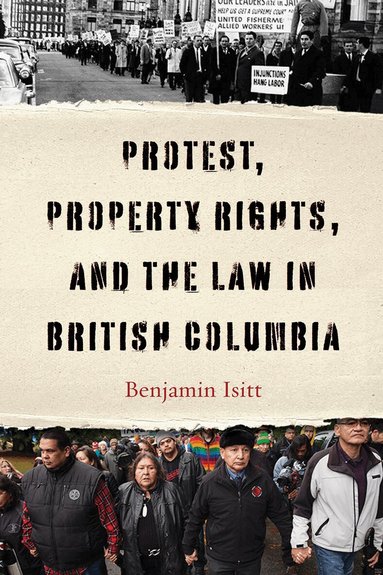
Protest, Property Rights, and the Law in British Columbia
1 275 krhos Bokus · exkl. frakt
384 kr skillnad mellan billigaste och dyraste butik i lager
Dubbelkollat idag
Jämför 2 butiker
- Bokus, 1 275 kr, frakt enligt butiken. Till butik (öppnas i ny flik)
I lagerFrakt: se butikenDubbelkollad 16:51
1 275 kr
Lägst
- Akademibokhandeln, 1 659 kr, frakt enligt butiken. Till butik (öppnas i ny flik)
I lagerFrakt: se butikenDubbelkollad 16:53
1 659 kr

Priser från butikernas flöden kan ha ändrats: det är priset hos butiken som gäller, så kontrollera det innan du handlar.
Prishistorik
Köp nu eller vänta?
Just nu kostar produkten 1 275 kr — 10 kr över det lägsta vi sett på 3 veckor.
Under den tiden har det oftast legat runt 1 270–1 280 kr.
Pris idag
1 275 kr
- Lägst
- 1 265 kr
- Snitt
- 1 289 kr
- Högst
- 1 649 kr
| 2026-09-25 | 1 649 kr · Lägst hos Akademibokhandeln |
|---|---|
| 2026-09-26 | 1 265 kr · Lägst hos Bokus |
| 2026-10-02 | 1 274 kr · Lägst hos Bokus |
| 2026-10-03 | 1 275 kr · Lägst hos Bokus |
| 2026-10-08 | 1 281 kr · Lägst hos Bokus |
| 2026-10-10 | 1 278 kr · Lägst hos Bokus |
| 2026-10-11 | 1 275 kr · Lägst hos Bokus |
| 2026-10-13 | 1 272 kr · Lägst hos Bokus |
| 2026-10-15 | 1 279 kr · Lägst hos Bokus |
| 2026-10-18 | 1 275 kr · Lägst hos Bokus |
Om produkten
Protest, Property Rights, and the Law in British Columbia
Läs merLäs mindre
From strikes at Vancouver Island coal fields in the early twentieth century to recent confrontations involving assertions of Indigenous rights, British Columbia has a long history of clashes between protesters and established interests. Protest, Property Rights, and the Law in British Columbia investigates legal responses to those protests stretching back over more than a century.Benjamin Isitt draws on case studies that illuminate both continuity and change in the regulation of protest. Whether through remote anti-logging blockades at Fairy Creek or tent encampments in downtown Vancouver, activists assert customary rights to property by appropriating space. Property owners and managers in turn deploy an array of legal remedies to uphold private rights by restoring control over space, notably through the use of injunctions, enlisting lawyers, judges, police, parliaments, and soldiers.Protest, Property Rights, and the Law in British Columbia persuasively argues that the power of private interests in these judicial disputes has been undercut to a degree, raising questions of legal legitimacy and signalling a potential rebalancing of rights and interests.