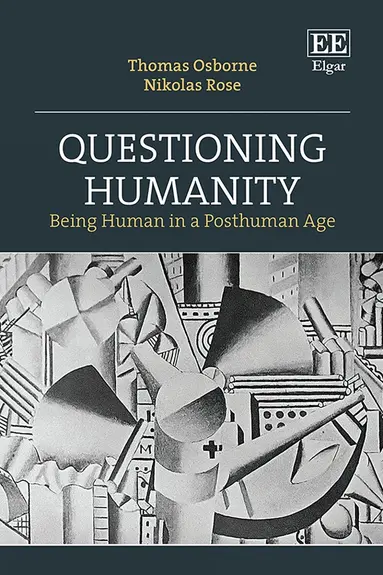
Questioning Humanity
473 krhos Bokus · exkl. frakt
146 kr skillnad mellan billigaste och dyraste butik i lager
Dubbelkollade priser
Jämför 3 butiker
- Bokus, 473 kr, frakt enligt butiken. Till butik (öppnas i ny flik)
I lagerFrakt: se butikenDubbelkollad 06:51
473 kr
Lägst
- Akademibokhandeln, 619 kr, frakt enligt butiken. Till butik (öppnas i ny flik)
I lagerFrakt: se butikenDubbelkollad 06:53
619 kr
- Adlibris, 467 kr, frakt enligt butiken. Till butik (öppnas i ny flik)
Slut i lagerFrakt: se butikenDubbelkollad 27 okt. 09:10
467 kr


Priser från butikernas flöden kan ha ändrats: det är priset hos butiken som gäller, så kontrollera det innan du handlar.
Prishistorik
Köp nu eller vänta?
Just nu kostar produkten 473 kr — 6 kr över det lägsta vi sett på 1 månad.
Under den tiden har det oftast legat runt 470 kr.
Pris idag
473 kr
- Lägst
- 467 kr
- Snitt
- 471 kr
- Högst
- 478 kr
| 2026-09-15 | 467 kr · Lägst hos Adlibris |
|---|---|
| 2026-10-09 | 474 kr · Lägst hos Bokus |
| 2026-10-12 | 473 kr · Lägst hos Bokus |
| 2026-10-16 | 475 kr · Lägst hos Bokus |
| 2026-10-20 | 474 kr · Lägst hos Bokus |
| 2026-10-24 | 476 kr · Lägst hos Bokus |
| 2026-10-28 | 478 kr · Lägst hos Bokus |
| 2026-10-29 | 477 kr · Lägst hos Bokus |
| 2026-11-01 | 473 kr · Lägst hos Bokus |
Om produkten
Questioning Humanity
Läs merLäs mindre
This innovative book questions what it means to be human today and in the future. Drawing on the natural, human and life sciences, Thomas Osborne and Nikolas Rose encourage us to reconsider the human condition and the ways in which humans are affected by their animality, technology and the prospect of their annihilation. Questioning Humanity builds on and questions established orthodoxies in the social sciences and humanities. Using arguments from the life sciences it introduces readers to debates surrounding posthumanism, human evolution, the uniqueness of the human mind and human consciousness. The book goes further, into novel territory, to examine relations and distinctions between humans and non-human animals, developments in 'artificial intelligence' and its limits, the prospect of human extinction by climate change, and the possibilities of alien civilizations. Osborne and Rose argue that despite calls for a new posthuman ethics, we remain all too human, and the social and human sciences should be imbued with a naturalistic humanism if they are to address the real and immediate challenges of local and global inequity and injustice.Providing an accessible introduction into both the contemporary challenges and future key questions within the social and human sciences, this book will be a vital read for undergraduate and postgraduate students in these areas. Questioning Humanity will also appeal to scholars from social, cultural, anthropological and biological disciplines interested in human distinctiveness.