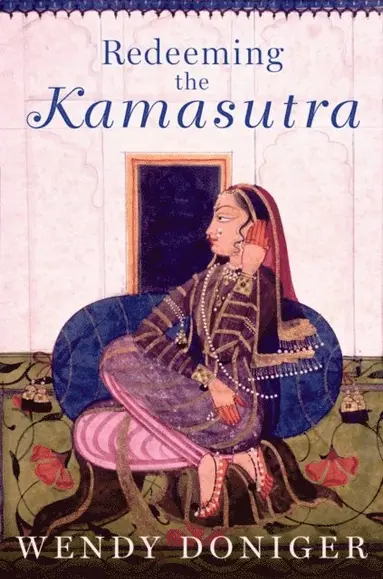
Redeeming the Kamasutra
Dubbelkollat idag
Jämför 1 butik
- Bokus, 169 kr, frakt enligt butiken. Till butik (öppnas i ny flik)
I lagerFrakt: se butikenDubbelkollad 22:51
169 kr
Lägst

Priser från butikernas flöden kan ha ändrats: det är priset hos butiken som gäller, så kontrollera det innan du handlar.
Prishistorik
Köp nu eller vänta?
Just nu kostar produkten 169 kr — 61 kr över det lägsta vi sett på 1 månad.
Under den tiden har det oftast legat runt 110–170 kr.
Pris idag
169 kr
- Lägst
- 108 kr
- Snitt
- 152 kr
- Högst
- 169 kr
| 2026-09-15 | 165 kr · Lägst hos Bokus |
|---|---|
| 2026-09-29 | 108 kr · Lägst hos Bokus |
| 2026-10-11 | 169 kr · Lägst hos Bokus |
Om produkten
Redeeming the Kamasutra
Läs merLäs mindre
The Kamasutra, composed in the third century CE, is the world''s most famous textbook of erotic love. There is nothing remotely like it even today, and for its time it was astonishingly sophisticated. Yet it is all but ignored as a serious work in its country of origin-sometimes taken as a matter of national shame rather than pride - and in the rest of the world it is a source of amused amazement and inspires magazine articles that offer "mattress-quaking sex styles" such as "the backstairs boogie" and "the spider web". In this scholarly and superbly readable book, one of the world''s foremost authorities on ancient Indian texts seeks to restore the Kamasutra to its proper place in the Sanskrit canon, as a landmark of India''s secular literature. She reveals fascinating aspects of the Kamasutra as a guide to the art of living for the cosmopolitan beau monde of ancient India: its emphasis on grooming and etiquette (including post-coital conversation), the study and practice of the arts (ranging from cooking and composing poetry to coloring one''s teeth and mixing perfumes), and discretion and patience in conducting affairs (especially adulterous affairs). In its encyclopedic social and psychological narratives, it also displays surprisingly modern ideas about gender and role-playing, female sexuality, and homosexual desire. Even as she draws our attention to the many ways in which the Kamasutra challenges the conventions of its time (and often ours) - in dismissing procreation as the aim of sex, for instance - Doniger also shows us how it perpetuates attitudes that have continued to darken human sexuality: passages that twin passion with violence, for example, and those that explain away women''s protests and exclamations of pain as ploys to excite their male partners. In these attitudes, as in its more enlightened observations on sexual love, we see the nearly two- thousand-year-old Kamasutra mirror twenty-first-century realities.In investigating and helping us understand a much celebrated but under-appreciated text, Wendy Doniger has produced a rich and compelling text of her own that will interest, delight, and surprise scholars and lay readers alike.