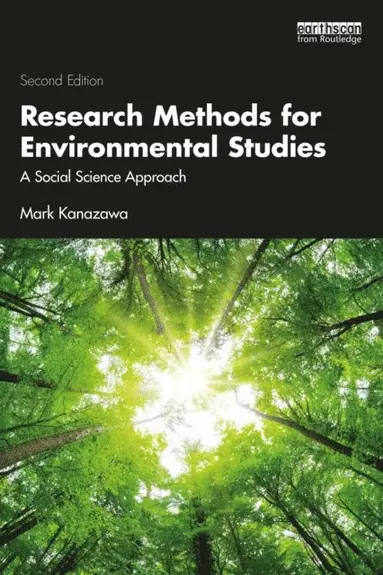
Research Methods for Environmental Studies
Bra pris nuLägsta priset på 1 månad
624 krhos Bokus · exkl. frakt
Dubbelkollat idag
Jämför 1 butik
- Bokus, 624 kr, frakt enligt butiken. Till butik (öppnas i ny flik)
I lagerFrakt: se butikenDubbelkollad 05:51
624 kr
Lägst

Priser från butikernas flöden kan ha ändrats: det är priset hos butiken som gäller, så kontrollera det innan du handlar.
Prishistorik
Köp nu eller vänta?
Just nu kostar produkten 624 kr — det lägsta vi sett på 1 månad.
Pris idag
624 kr
- Lägst
- 624 kr
- Snitt
- 662 kr
- Högst
- 695 kr
| 2026-09-15 | 695 kr · Lägst hos Bokus |
|---|---|
| 2026-10-10 | 624 kr · Lägst hos Bokus |
Om produkten
Research Methods for Environmental Studies
Läs merLäs mindre
The methodological needs of environmental studies are unique in the breadth of research questions that can be posed, calling for a textbook that covers a broad swath of approaches to conducting research with potentially many different kinds of evidence.Fully updated to address new developments such as the effects of the internet, recent trends in the use of computers, remote sensing, and large data sets, this new edition of Research Methods for Environmental Studies is written specifically for social science-based research into the environment. This revised edition contains new chapters on coding, focus groups, and an extended treatment of hypothesis testing. The textbook covers the best-practice research methods most used to study the environment and its connections to societal and economic activities and objectives. Over five key parts, Kanazawa introduces quantitative and qualitative approaches, mixed methods, and the special requirements of interdisciplinary research, emphasizing that methodological practice should be tailored to the specific needs of the project. Within these parts, detailed coverage is provided on key topics including the identification of a research project, hypothesis testing, spatial analysis, the case study method, ethnographic approaches, discourse analysis, mixed methods, survey and interview techniques, focus groups, and ethical issues in environmental research. Drawing on a variety of extended and updated examples to encourage problem-based learning and fully addressing the challenges associated with interdisciplinary investigation, this book will be an essential resource for students embarking on courses exploring research methods in environmental studies.