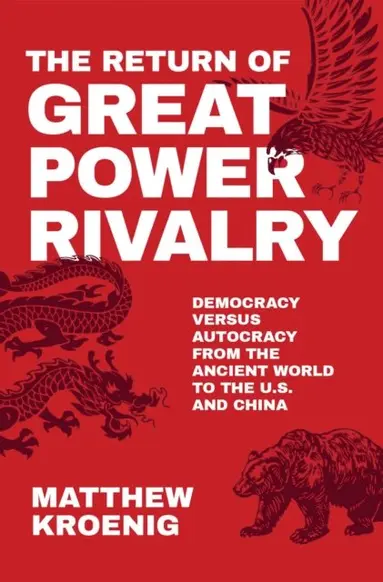
Return of Great Power Rivalry
Dubbelkollat idag
Jämför 1 butik
- Bokus, 185 kr, frakt enligt butiken. Till butik (öppnas i ny flik)
I lagerFrakt: se butikenDubbelkollad 22:51
185 kr
Lägst

Priser från butikernas flöden kan ha ändrats: det är priset hos butiken som gäller, så kontrollera det innan du handlar.
Prishistorik
Köp nu eller vänta?
Just nu kostar produkten 185 kr — 76 kr över det lägsta vi sett på 1 månad.
Under den tiden har det oftast legat runt 110–190 kr.
Pris idag
185 kr
- Lägst
- 109 kr
- Snitt
- 164 kr
- Högst
- 185 kr
| 2026-09-15 | 181 kr · Lägst hos Bokus |
|---|---|
| 2026-09-29 | 109 kr · Lägst hos Bokus |
| 2026-10-06 | 111 kr · Lägst hos Bokus |
| 2026-10-11 | 185 kr · Lägst hos Bokus |
Om produkten
Return of Great Power Rivalry
Läs merLäs mindre
The United States of America has been the most powerful country in the world for over seventy years, but recently the U.S. National Security Strategy declared that the return of great power competition with Russia and China is the greatest threat to U.S. national security. Further, many analysts predict that America''s autocratic rivals will have at least some success in disrupting-and, in the longer term, possibly even displacing-U.S. global leadership. Brilliant and engagingly written, The Return of Great Power Rivalry argues that this conventional wisdom is wrong. Drawing on an extraordinary range of historical evidence and the works of figures like Herodotus, Machiavelli, and Montesquieu and combining it with cutting-edge social science research, Matthew Kroenig advances the riveting argument that democracies tend to excel in great power rivalries. He contends that democracies actually have unique economic, diplomatic, and military advantages in long-run geopolitical competitions. He considers autocratic advantages as well, but shows that these are more than outweighed by their vulnerabilities.Kroenig then shows these arguments through the seven most important cases of democratic-versus-autocratic rivalries throughout history, from the ancient world to the Cold War. Finally, he analyzes the new era of great power rivalry among the United States, Russia, and China through the lens of the democratic advantage argument. By advancing a "hard-power" argument for democracy, Kroenig demonstrates that despite its many problems, the U.S. is better positioned to maintain a global leadership role than either Russia or China. A vitally important book for anyone concerned about the future of global geopolitics, The Return of Great Power Rivalry provides both an innovative way of thinking about power in international politics and an optimistic assessment of the future of American global leadership.