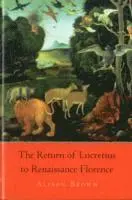
Return of Lucretius to Renaissance Florence
- Vikt 0,38 kg
438 krhos Bokus · exkl. frakt
131 kr skillnad mellan billigaste och dyraste butik i lager
Dubbelkollat idag
Jämför 2 butiker
- Bokus, 438 kr, frakt enligt butiken. Till butik (öppnas i ny flik)
I lagerFrakt: se butikenDubbelkollad 21:51
438 kr
Lägst
- Akademibokhandeln, 569 kr, frakt enligt butiken. Till butik (öppnas i ny flik)
I lagerFrakt: se butikenDubbelkollad 21:53
569 kr

Priser från butikernas flöden kan ha ändrats: det är priset hos butiken som gäller, så kontrollera det innan du handlar.
Prishistorik
Köp nu eller vänta?
Just nu kostar produkten 438 kr — 11 kr över det lägsta vi sett på 1 månad.
Under den tiden har det oftast legat runt 440 kr.
Pris idag
438 kr
- Lägst
- 427 kr
- Snitt
- 436 kr
- Högst
- 443 kr
| 2026-09-15 | 427 kr · Lägst hos Bokus |
|---|---|
| 2026-09-17 | 430 kr · Lägst hos Bokus |
| 2026-09-20 | 431 kr · Lägst hos Bokus |
| 2026-09-24 | 432 kr · Lägst hos Bokus |
| 2026-09-26 | 435 kr · Lägst hos Bokus |
| 2026-09-28 | 436 kr · Lägst hos Bokus |
| 2026-10-02 | 439 kr · Lägst hos Bokus |
| 2026-10-07 | 443 kr · Lägst hos Bokus |
| 2026-10-09 | 439 kr · Lägst hos Bokus |
| 2026-10-11 | 440 kr · Lägst hos Bokus |
| 2026-10-13 | 439 kr · Lägst hos Bokus |
| 2026-10-20 | 436 kr · Lägst hos Bokus |
| 2026-10-23 | 435 kr · Lägst hos Bokus |
| 2026-10-27 | 437 kr · Lägst hos Bokus |
| 2026-10-28 | 438 kr · Lägst hos Bokus |
Om produkten
Return of Lucretius to Renaissance Florence
Läs merLäs mindre
In this first comprehensive study of the effect of Lucretius's De rerum natura on Florentine thought in the Renaissance, Alison Brown demonstrates how Lucretius was used by Florentine thinkers-earlier and more widely than has been supposed-to provide a radical critique of prevailing orthodoxies.To answer the question of why ordinary Florentines were drawn to this recently discovered text, despite its threat to orthodox Christian belief, Brown tracks interest in it through three humanists-the most famous of whom was Machiavelli-all working not as philologists but as practical administrators and teachers in the Florentine chancery and university. Interpreting their direct use of Lucretius within the context of mercantile Florence, Brown highlights three dangerous themes that had particular appeal: Lucretius's attack on superstitious religion and an afterlife; his pre-Darwinian theory of evolution; and his atomism, with its theory of free will and the chance creation of the world. The humanists' challenge to established beliefs encouraged the growth of a "Lucretian network" of younger, politically disaffected Florentines. Brown thus adds a missing dimension to our understanding of the "revolution" in sixteenth-century political thinking, as she enriches our definition of the Renaissance in a context of newly discovered worlds and new social networks.
Specifikationer
Fakta
- Vikt
- 0,38 kg
- GTIN
- 09780674050327
Uppgifter från tillverkare och butiker.