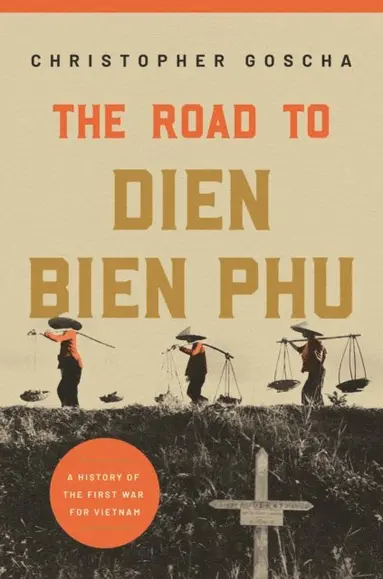
Road to Dien Bien Phu
Dubbelkollat idag
Jämför 1 butik
- Bokus, 324 kr, frakt enligt butiken. Till butik (öppnas i ny flik)
I lagerFrakt: se butikenDubbelkollad 02:51
324 kr
Lägst

Priser från butikernas flöden kan ha ändrats: det är priset hos butiken som gäller, så kontrollera det innan du handlar.
Prishistorik
Köp nu eller vänta?
Just nu kostar produkten 324 kr — 7 kr över det lägsta vi sett på 1 månad.
Pris idag
324 kr
- Lägst
- 317 kr
- Snitt
- 320 kr
- Högst
- 324 kr
| 2026-09-15 | 317 kr · Lägst hos Bokus |
|---|---|
| 2026-10-12 | 324 kr · Lägst hos Bokus |
Om produkten
Road to Dien Bien Phu
Läs merLäs mindre
A multifaceted history of Ho Chi Minh's climactic victory over French colonial might that foreshadowed America's experience in VietnamOn May 7, 1954, when the bullets stopped and the air stilled in Dien Bien Phu, there was no doubt that Vietnam could fight a mighty colonial power and win. After nearly a decade of struggle, a nation forged in the crucible of war had achieved a victory undreamed of by any other national liberation movement. The Road to Dien Bien Phu tells the story of how Ho Chi Minh turned a ragtag guerrilla army into a modern fighting force capable of bringing down the formidable French army.Taking readers from the outbreak of fighting in 1945 to the epic battle at Dien Bien Phu, Christopher Goscha shows how Ho transformed Vietnam from a decentralized guerrilla state based in the countryside to a single-party communist state shaped by a specific form of "War Communism." Goscha discusses how the Vietnamese operated both states through economics, trade, policing, information gathering, and communications technology. He challenges the wisdom of counterinsurgency methods developed by the French and still used by the Americans today, and explains why the First Indochina War was arguably the most brutal war of decolonization in the twentieth century, killing a million Vietnamese, most of them civilians.Panoramic in scope, The Road to Dien Bien Phu transforms our understanding of this conflict and the one the United States would later enter, and sheds new light on communist warfare and statecraft in East Asia today.