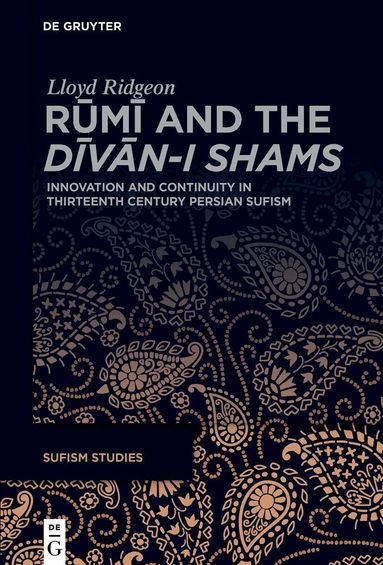
Rūmī and the ›Dīvān-i Shams‹
Bra pris nuLägsta priset på 3 veckor
1 622 krhos Bokus · exkl. frakt
487 kr skillnad mellan billigaste och dyraste butik i lager
Dubbelkollat idag
Jämför 2 butiker
- Bokus, 1 622 kr, frakt enligt butiken. Till butik (öppnas i ny flik)
I lagerFrakt: se butikenDubbelkollad 02:51
1 622 kr
Lägst
- Akademibokhandeln, 2 109 kr, frakt enligt butiken. Till butik (öppnas i ny flik)
I lagerFrakt: se butikenDubbelkollad 03:19
2 109 kr

Priser från butikernas flöden kan ha ändrats: det är priset hos butiken som gäller, så kontrollera det innan du handlar.
Prishistorik
Köp nu eller vänta?
Just nu kostar produkten 1 622 kr — det lägsta vi sett på 3 veckor.
Under den tiden har det oftast legat runt 1 620 kr.
Pris idag
1 622 kr
- Lägst
- 1 622 kr
- Snitt
- 1 699 kr
- Högst
- 2 309 kr
| 2026-09-27 | 2 309 kr · Lägst hos Akademibokhandeln |
|---|---|
| 2026-09-28 | 1 773 kr · Lägst hos Bokus |
| 2026-10-01 | Ingen butik hade produkten i lager |
| 2026-10-02 | 2 109 kr · Lägst hos Akademibokhandeln |
| 2026-10-03 | 1 622 kr · Lägst hos Bokus |
Om produkten
Rūmī and the ›Dīvān-i Shams‹
Läs merLäs mindre
This monograph responds to all the publications about Rūmī's poetry that have appeared in recent years. Many of those are non-academic, devotional works that present Rūmī's wisdom as an answer to a modern society's contemporary malaise. However, this decontextualizes Rūmī and presents him as an ahistorical figure who transcended Islam and Sufism. The aim of this book, Rūmī and the Dīvān-i Shams, is to present Rūmī as a thirteenth century Sufi who engaged with his traditions and the worldviews, prejudices and suppositions of his time. Of necessity, the views of Sufis from a similar period are considered to determine to what extent, if any, Rūmī may be considered an innovative and original Sufi. All this is carried out by examining Rūmī's love odes (ghazals) as collected in the Dīvān-i kabīr (also known popularly as the Dīvān-i Shams), rather than the Mathnawī. The Dīvān-i kabīr is regarded as Rūmī's personal statement, and reflects a perspective from the heart. The book contains chapters on his Sufi influences, the nature of his Sufism (whether it was antinomian or not), and on Sufi ritual performance and theology.