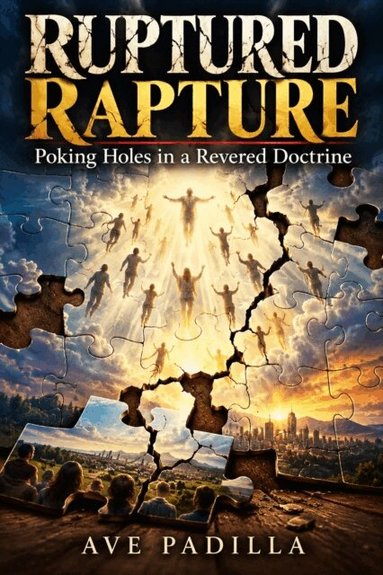
Ruptured Rapture
Dubbelkollat idag
Jämför 1 butik
- Bokus, 68 kr, frakt enligt butiken. Till butik (öppnas i ny flik)
I lagerFrakt: se butikenDubbelkollad 14:51
68 kr
Lägst

Priser från butikernas flöden kan ha ändrats: det är priset hos butiken som gäller, så kontrollera det innan du handlar.
Om produkten
Ruptured Rapture
Läs merLäs mindre
There are doctrines that Christians debate, doctrines that Christians defend, and doctrines that have become so deeply embedded in Christian imagination that questioning them can feel almost like questioning Christianity itself. The Rapture has become one of those doctrines. For millions of Christians, the scenario is familiar. One ordinary day, without warning, believers suddenly disappear. Cars become driverless. Airplanes lose their pilots. Empty clothes are left behind. Families are separated. The world is plunged into confusion. Somewhere above the earth, Christ gathers His people to Himself. On earth, the great Tribulation begins. Seven years later, Christ returns visibly with the saints, defeats His enemies, establishes His millennial kingdom, and eventually ushers humanity into the eternal state.The story is dramatic, memorable, and emotionally powerful. It has been preached from pulpits, illustrated in books, portrayed in films, discussed in prophecy conferences, and woven into the expectations of generations of believers. It has also become so familiar that many Christians assume the Bible itself presents this entire sequence as a single, clearly defined scenario. Yet familiarity should never be mistaken for biblical necessity. The important question is not whether the story is familiar, nor whether millions sincerely believe it. The important question is whether Scripture actually tells the story in the way the doctrine claims.That question is more complicated than it first appears. The Bible certainly speaks of believers being caught up to meet Christ. Paul explicitly describes such an event. The Bible also speaks of resurrection, transformation, Christ's coming, judgment, the Kingdom of God, and the renewal of creation. The difficulty begins when all these themes are assembled into a particular prophetic chronology and then that chronology is treated as though it were itself a direct statement of Scripture.