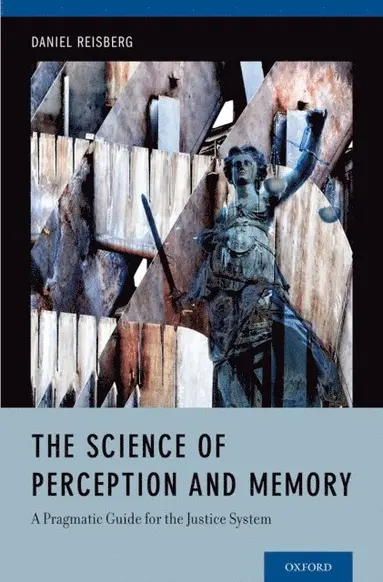
Science of Perception and Memory
Dubbelkollade priser
Jämför 2 butiker
- Bokus, 980 kr, frakt enligt butiken. Till butik (öppnas i ny flik)
I lagerFrakt: se butikenDubbelkollad 07:51
980 kr
Lägst
- Adlibris, 1 100 kr, frakt enligt butiken. Till butik (öppnas i ny flik)
Slut i lagerFrakt: se butikenDubbelkollad 27 okt. 09:10
1 100 kr


Priser från butikernas flöden kan ha ändrats: det är priset hos butiken som gäller, så kontrollera det innan du handlar.
Prishistorik
Köp nu eller vänta?
Just nu kostar produkten 980 kr — 56 kr över det lägsta vi sett på 1 månad.
Under den tiden har det oftast legat runt 920–980 kr.
Pris idag
980 kr
- Lägst
- 924 kr
- Snitt
- 950 kr
- Högst
- 980 kr
| 2026-09-15 | 924 kr · Lägst hos Bokus |
|---|---|
| 2026-10-09 | 944 kr · Lägst hos Bokus |
| 2026-10-11 | 980 kr · Lägst hos Bokus |
Om produkten
Science of Perception and Memory
Läs merLäs mindre
A robbery victim tries to remember how the crime unfolded and who was present at the scene. A medical patient recalls the doctor saying that the pain in her side wasn''t worrisome, and now that the tumor is much larger, she''s suing. An investigation of insider trading hinges on someone''s memory of exactly what was said at a particular business meeting. In these and countless other examples, our ability to remember our experiences is crucial for the justice system. The problem, though, is that perception and memory are fallible. How often do our eyes or memories deceive us? Is there some way to avoid these errors? Can we specify the circumstances in which perceptual or memory errors are more or less likely to occur?Professor Daniel Reisberg tackles these questions by drawing on the available science and his personal experience training attorneys. He provides detailed pragmatic advice that will prove helpful to law enforcement, prosecutors, defenders, and anyone else who hopes to maximize the quality of the evidence available to the courts -- whether the evidence is coming from witnesses, victims, or defendants.This book is carefully rooted in research but written in a way that will make it fully accessible to non-scientists working in the justice system. Early chapters provide an overview of the relevant science and a broad portrait of how perception and memory function. Later chapters offer practical solutions for navigating situations involving eyewitness identifications, remembered conversations, evidence obtained from interviews with children, confession evidence, and the risks of false confession.