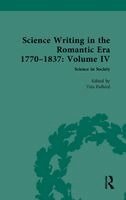
Science Writing in the Romantic Era 1770-1837
- Vikt 1,25 kg
2 134 krhos Bokus · exkl. frakt
635 kr skillnad mellan billigaste och dyraste butik i lager
Dubbelkollade priser
Jämför 2 butiker
- Bokus, 2 134 kr, frakt enligt butiken. Till butik (öppnas i ny flik)
I lagerFrakt: se butikenDubbelkollad 00:51
2 134 kr
Lägst
- Akademibokhandeln, 2 769 kr, frakt enligt butiken. Till butik (öppnas i ny flik)
I lagerFrakt: se butikenDubbelkollad 17 okt. 23:53
2 769 kr

Priser från butikernas flöden kan ha ändrats: det är priset hos butiken som gäller, så kontrollera det innan du handlar.
Prishistorik
Köp nu eller vänta?
Pris idag
2 134 kr
- Lägst
- 2 112 kr
- Snitt
- 2 177 kr
- Högst
- 2 749 kr
| 2026-10-05 | 2 749 kr · Lägst hos Akademibokhandeln |
|---|---|
| 2026-10-06 | 2 112 kr · Lägst hos Bokus |
| 2026-10-08 | 2 143 kr · Lägst hos Bokus |
| 2026-10-10 | 2 140 kr · Lägst hos Bokus |
| 2026-10-11 | 2 133 kr · Lägst hos Bokus |
| 2026-10-12 | 2 126 kr · Lägst hos Bokus |
| 2026-10-16 | 2 134 kr · Lägst hos Bokus |
Om produkten
Science Writing in the Romantic Era 1770-1837
Läs merLäs mindre
This volume draws together texts revealing the increased and varied roles that science played in society at large, beyond the laboratory, the learned society and the scientific journal. Women's science writing, sampled here, was often professedly designed to educate a lay - usually female - readership. The emphasis was less on new discovery than on clear explanation, often in form of dialogue between a young woman and instructor. It became very successful, initiating a genre of popular science writing that continues to this day. It helped to establish the figure of the 'scientist' (a figure first named in this period) as a man of authority. Davy and Coleridge raised him to the level of a master of nature; Babbage called for his - and science's - professionalization and institutional support. Whewell and Herschel established disciplinary boundaries and defined methodology and proper limits of enquiry (in face of fears that science was usurping religious belief). This was the period in which science became institutionalized and professionalized, with the founding of the Medical Pneumatic Institution by Beddoes-Britain's first medical research establishment, of the Royal Institution by Rumford and others (where Davy and Faraday would make momentous discoveries) and of the Mechanics' Institutes by Brougham and others (where science and technology would be disseminated to working men). Working men were, by the 1830s, often 'mechanics'-engineers-in mills, factories and forges, in what Carlyle defined as an age of machinery and mechanisms. The impact of mechanization - steam engines, power looms, threshing machines - was enormous, radically altering human society and the natural world, bringing about today's world of mass, globalized industry, rapid travel, standardized production, and rapacious exploitation of the earth.
Specifikationer
Fakta
- Vikt
- 1,25 kg
- GTIN
- 09781041351009
Uppgifter från tillverkare och butiker.