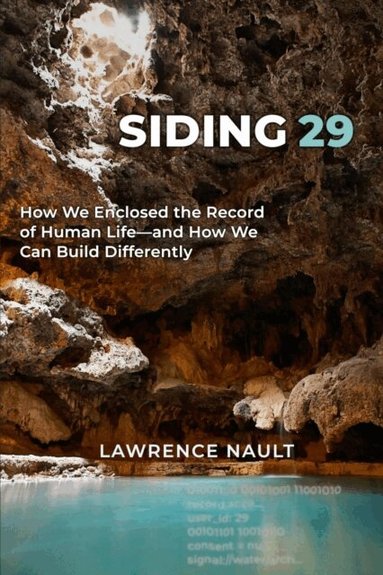
Siding 29: How We Enclosed the Record of Human Life-and How We Can Build Differently
Dubbelkollat idag
Jämför 1 butik
- Bokus, 59 kr, frakt enligt butiken. Till butik (öppnas i ny flik)
I lagerFrakt: se butikenDubbelkollad 04:51
59 kr
Lägst

Priser från butikernas flöden kan ha ändrats: det är priset hos butiken som gäller, så kontrollera det innan du handlar.
Prishistorik
Köp nu eller vänta?
Just nu kostar produkten 59 kr — 1 kr över det lägsta vi sett på 2 veckor.
Pris idag
59 kr
- Lägst
- 58 kr
- Snitt
- 59 kr
- Högst
- 59 kr
| 2026-09-30 | 58 kr · Lägst hos Bokus |
|---|---|
| 2026-10-05 | 59 kr · Lägst hos Bokus |
Om produkten
Siding 29: How We Enclosed the Record of Human Life-and How We Can Build Differently
Läs merLäs mindre
Before asking who may use our data, perhaps we should ask a more basic question: should the record exist at all?Every day, ordinary life leaves behind a growing trail of information-where we go, what we buy, what we search for, what holds our attention and what systems infer about us. Privacy laws increasingly regulate that information once it has been collected. Siding 29 asks what happened before the collection became normal.Beginning with the history of the hot springs at Cave and Basin in what is now Banff National Park, Lawrence Nault traces a recurring pattern: value exists within relationships, outsiders learn to separate and claim it, an enclosure forms, and law eventually arrives to regulate what has already been built.From data brokers and behavioural advertising to algorithmic pricing, artificial intelligence, surveillance, automated decision-making and Indigenous data sovereignty, Siding 29 examines how the record of human life became infrastructure-and why simply regulating that infrastructure may not be enough.This is not an argument against technology, nor a demand that everyone make the same trade-off between privacy and convenience. It is an argument that those trade-offs should remain choices.At the centre of the book are three questions:Need. Does this record need to exist?Authority. Who has the right to decide?Limits. If it exists, what may be done with it-and what should remain outside collection altogether?Because inevitability is not the only option.It is the option left when we do and say nothing.