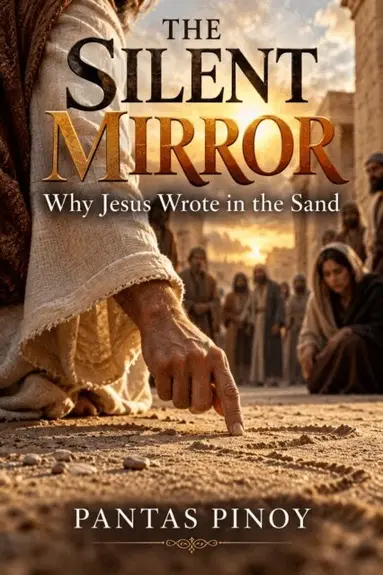
Silent Mirror
Dubbelkollat idag
Jämför 1 butik
- Bokus, 60 kr, frakt enligt butiken. Till butik (öppnas i ny flik)
I lagerFrakt: se butikenDubbelkollad 05:51
60 kr
Lägst

Priser från butikernas flöden kan ha ändrats: det är priset hos butiken som gäller, så kontrollera det innan du handlar.
Om produkten
Silent Mirror
Läs merLäs mindre
There is something profoundly strange about the story of Jesus writing in the sand. The Gospel tells us that Jesus bent down and wrote on the ground, yet it never tells us what he wrote. That tiny omission has survived for nearly two thousand years, apparently without causing the heavens to collapse. It has, however, caused considerable discomfort among people who believe that every mystery must eventually be converted into an explanation. So the guessing began. Some have suggested that Jesus wrote the sins of the accusers. Others imagine that he wrote a passage from Scripture, the names of the guilty, or perhaps some private divine indictment. The possibilities are endless. The evidence is not. The text tells us that Jesus wrote. It does not tell us what he wrote. And perhaps that silence is not a defect in the story at all. Perhaps it is the most important part of it.We are accustomed to thinking that the meaning of an event must be contained in words. If Jesus wanted to teach something important, surely he must have said it. If he wanted to establish a doctrine, surely he would have stated it clearly. If he wanted future generations to know what he meant, surely he would have left instructions. But here, in one of the most intriguing scenes attributed to Jesus, he does something almost perversely inconvenient for theology: he says very little, bends down, and writes something nobody preserves. Then the writing disappears. The episode seems almost designed to frustrate the machinery of theological certainty. There is an action without an explanation, a message without a surviving text, and a silence that refuses to be filled. Perhaps, instead of asking what Jesus wrote, we should ask why he chose to write where nothing could remain.The scene begins with a woman who has been caught in adultery and brought before Jesus by people who appear remarkably confident about what should happen next. They have an accusation, a law, a punishment, and the moral certainty necessary to administer all three. The woman has ceased to be a person in their eyes. She has become a case. She is evidence of sin, evidence of transgression, evidence that somebody deserves punishment, and perhaps most conveniently of all, evidence that the people holding the stones are standing on the righteous side of morality. They do not merely want justice; they want Jesus to validate their judgment. They want heaven to sign the document they have already prepared.