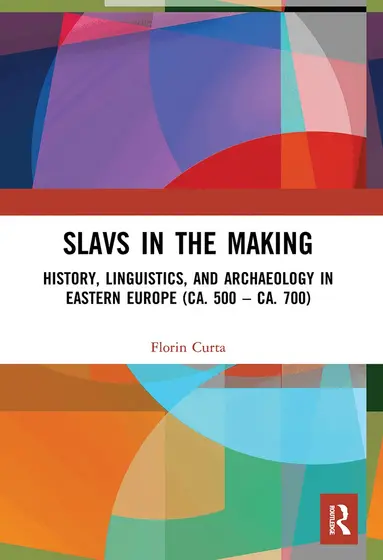
Slavs in the Making
- Vikt 0,51 kg
784 krhos Bokus · exkl. frakt
235 kr skillnad mellan billigaste och dyraste butik i lager
Dubbelkollat idag
Jämför 2 butiker
- Bokus, 784 kr, frakt enligt butiken. Till butik (öppnas i ny flik)
I lagerFrakt: se butikenDubbelkollad 06:51
784 kr
Lägst
- Akademibokhandeln, 1 019 kr, frakt enligt butiken. Till butik (öppnas i ny flik)
I lagerFrakt: se butikenDubbelkollad 06:53
1 019 kr

Priser från butikernas flöden kan ha ändrats: det är priset hos butiken som gäller, så kontrollera det innan du handlar.
Prishistorik
Köp nu eller vänta?
Just nu kostar produkten 784 kr — 12 kr över det lägsta vi sett på 1 månad.
Under den tiden har det oftast legat runt 780–790 kr.
Pris idag
784 kr
- Lägst
- 772 kr
- Snitt
- 782 kr
- Högst
- 791 kr
| 2026-09-15 | 779 kr · Lägst hos Bokus |
|---|---|
| 2026-09-16 | 777 kr · Lägst hos Bokus |
| 2026-09-18 | 776 kr · Lägst hos Bokus |
| 2026-09-20 | 774 kr · Lägst hos Bokus |
| 2026-09-22 | 775 kr · Lägst hos Bokus |
| 2026-09-24 | 773 kr · Lägst hos Bokus |
| 2026-09-27 | 772 kr · Lägst hos Bokus |
| 2026-09-30 | 773 kr · Lägst hos Bokus |
| 2026-10-02 | 779 kr · Lägst hos Bokus |
| 2026-10-03 | 782 kr · Lägst hos Bokus |
| 2026-10-07 | 790 kr · Lägst hos Bokus |
| 2026-10-09 | 789 kr · Lägst hos Bokus |
| 2026-10-10 | 787 kr · Lägst hos Bokus |
| 2026-10-11 | 785 kr · Lägst hos Bokus |
| 2026-10-15 | 789 kr · Lägst hos Bokus |
| 2026-10-16 | 787 kr · Lägst hos Bokus |
| 2026-10-20 | 786 kr · Lägst hos Bokus |
| 2026-10-21 | 785 kr · Lägst hos Bokus |
| 2026-10-23 | 788 kr · Lägst hos Bokus |
| 2026-10-28 | 791 kr · Lägst hos Bokus |
| 2026-10-30 | 789 kr · Lägst hos Bokus |
| 2026-10-31 | 784 kr · Lägst hos Bokus |
Om produkten
Slavs in the Making
Läs merLäs mindre
Slavs in the Making takes a fresh look at archaeological evidence from parts of Slavic-speaking Europe north of the Lower Danube, including the present-day territories of the Czech Republic, Slovakia, Poland, Belarus, Ukraine, and Russia. Nothing is known about what the inhabitants of those remote lands called themselves during the sixth century, or whether they spoke a Slavic language. The book engages critically with the archaeological evidence from these regions, and questions its association with the "Slavs" that has often been taken for granted. It also deals with the linguistic evidence-primarily names of rivers and other bodies of water-that has been used to identify the primordial homeland of the Slavs, and from which their migration towards the Lower Danube is believed to have started. It is precisely in this area that sociolinguistics can offer a serious alternative to the language tree model currently favoured in linguistic paleontology. The question of how best to explain the spread of Slavic remains a controversial issue. This book attempts to provide an answer, and not just a critique of the method of linguistic paleontology upon which the theory of the Slavic migration and homeland relies. The book proposes a model of interpretation that builds upon the idea that (Common) Slavic cannot possibly be the result of Slavic migration. It addresses the question of migration in the archaeology of early medieval Eastern Europe, and makes a strong case for a more nuanced interpretation of the archaeological evidence of mobility. It will appeal to scholars and students interested in medieval history, migration, and the history of Eastern and Central Europe.
Specifikationer
Fakta
- Vikt
- 0,51 kg
- GTIN
- 09780367548353
Uppgifter från tillverkare och butiker.