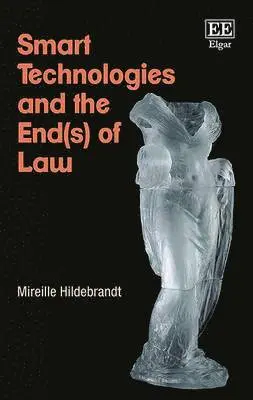
Smart Technologies and the End(s) of Law
461 kr462 kr−0% senaste veckanhos Bokus · exkl. frakt
Jämfört med det lägsta pris vi sett de 30 dagarna före sänkningen.
138 kr skillnad mellan billigaste och dyraste butik i lager
Dubbelkollat idag
Jämför 2 butiker
- Bokus, 461 kr, frakt enligt butiken. Till butik (öppnas i ny flik)
I lagerFrakt: se butikenDubbelkollad 11:51
461 kr
Lägst
- Akademibokhandeln, 599 kr, frakt enligt butiken. Till butik (öppnas i ny flik)
I lagerFrakt: se butikenDubbelkollad 11:53
599 kr

Priser från butikernas flöden kan ha ändrats: det är priset hos butiken som gäller, så kontrollera det innan du handlar.
Prishistorik
Köp nu eller vänta?
Just nu kostar produkten 461 kr — 2 kr över det lägsta vi sett på 1 månad.
Under den tiden har det oftast legat runt 460 kr.
Pris idag
461 kr
- Lägst
- 459 kr
- Snitt
- 462 kr
- Högst
- 465 kr
| 2026-09-15 | 459 kr · Lägst hos Bokus |
|---|---|
| 2026-09-18 | 462 kr · Lägst hos Bokus |
| 2026-09-19 | 461 kr · Lägst hos Bokus |
| 2026-09-25 | 459 kr · Lägst hos Bokus |
| 2026-09-30 | 460 kr · Lägst hos Bokus |
| 2026-10-02 | 463 kr · Lägst hos Bokus |
| 2026-10-04 | 465 kr · Lägst hos Bokus |
| 2026-10-09 | 464 kr · Lägst hos Bokus |
| 2026-10-12 | 462 kr · Lägst hos Bokus |
| 2026-10-16 | 465 kr · Lägst hos Bokus |
| 2026-10-17 | 464 kr · Lägst hos Bokus |
| 2026-10-18 | 463 kr · Lägst hos Bokus |
| 2026-10-22 | 462 kr · Lägst hos Bokus |
| 2026-10-24 | 464 kr · Lägst hos Bokus |
| 2026-10-27 | 465 kr · Lägst hos Bokus |
| 2026-10-30 | 463 kr · Lägst hos Bokus |
| 2026-11-01 | 461 kr · Lägst hos Bokus |
Om produkten
Smart Technologies and the End(s) of Law
Läs merLäs mindre
This timely book tells the story of the smart technologies that reconstruct our world, by provoking their most salient functionality: the prediction and preemption of our day-to-day activities, preferences, health and credit risks, criminal intent and spending capacity.Mireille Hildebrandt claims that we are in transit between an information society and a data-driven society, which has far reaching consequences for the world we depend on. She highlights how the pervasive employment of machine-learning technologies that inform so-called 'data-driven agency' threaten privacy, identity, autonomy, non-discrimination, due process and the presumption of innocence. The author argues how smart technologies undermine, reconfigure and overrule the ends of the law in a constitutional democracy, jeopardizing law as an instrument of justice, legal certainty and the public good. Nevertheless, the book calls on lawyers, computer scientists and civil society not to reject smart technologies, explaining how further engaging these technologies may help to reinvent the effective protection of the Rule of Law.Academics and researchers interested in the philosophy of law and technology will find this book both discerning and relevant. Practitioners and policy makers in the areas of law, computer science and engineering will benefit from the insight into smart technologies and their impact today.