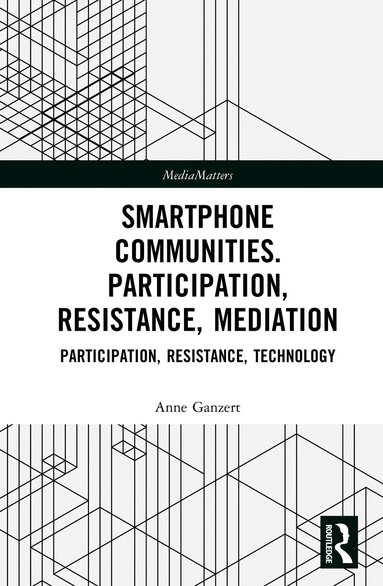
Smartphone Communities
2 483 krhos Bokus · exkl. frakt
786 kr skillnad mellan billigaste och dyraste butik i lager
Dubbelkollat idag
Jämför 2 butiker
- Bokus, 2 483 kr, frakt enligt butiken. Till butik (öppnas i ny flik)
I lagerFrakt: se butikenDubbelkollad 15:58
2 483 kr
Lägst
- Akademibokhandeln, 3 269 kr, frakt enligt butiken. Till butik (öppnas i ny flik)
I lagerFrakt: se butikenDubbelkollad 15:58
3 269 kr

Priser från butikernas flöden kan ha ändrats: det är priset hos butiken som gäller, så kontrollera det innan du handlar.
Prishistorik
Köp nu eller vänta?
Pris idag
2 483 kr
- Lägst
- 2 483 kr
- Snitt
- 2 856 kr
- Högst
- 3 229 kr
| 2026-10-15 | 3 229 kr · Lägst hos Akademibokhandeln |
|---|---|
| 2026-10-16 | 2 483 kr · Lägst hos Bokus |
Om produkten
Smartphone Communities
Läs merLäs mindre
Smartphone Communities places the smartphone - our most personal and ubiquitous medium - at the centre of an in-depth exploration of contemporary community formation. The book ground-breaking contribution lies in theorizing the smartphone not merely as a device, but as a dynamic social infrastructure through which communities are continuously assembled, negotiated, and contested.Conceptualizing the smartphone user as a mobile, permanently networked subject, the book advances a multi-directional media-theoretical framework that bridges participation theory, fan studies, and visual culture. Focusing primarily on Western, platform-capitalist contexts from the 2010s to the mid-2020s, Anne Ganzert analyzes topical and widely recognizable case studies, including TikTok, Pokémon Go, Tinder, and Habitica. These platforms serve as lenses through which social, economic, and political power relations become visible, from algorithmic governance and data extraction to practices of play, intimacy, self-optimization, and resistance.Readers will gain a comprehensive understanding of smartphone-based communities through a blend of media theory and empirical analysis. Addressed to undergraduates, postgraduates, scholars of media and cultural studies, as well as non-specialist readers such as librarians and booksellers, the book offers an accessible yet theoretically ambitious account of smartphone-based communities.