Socialist Car
- Vikt 0,34 kg
428 krhos Bokus · exkl. frakt
131 kr skillnad mellan billigaste och dyraste butik i lager
Dubbelkollat idag
Jämför 2 butiker
- Bokus, 428 kr, frakt enligt butiken. Till butik (öppnas i ny flik)
I lagerFrakt: se butikenDubbelkollad 17:51
428 kr
Lägst
- Akademibokhandeln, 559 kr, frakt enligt butiken. Till butik (öppnas i ny flik)
I lagerFrakt: se butikenDubbelkollad 17:53
559 kr

Priser från butikernas flöden kan ha ändrats: det är priset hos butiken som gäller, så kontrollera det innan du handlar.
Prishistorik
Köp nu eller vänta?
Pris idag
428 kr
- Lägst
- 426 kr
- Snitt
- 440 kr
- Högst
- 559 kr
| 2026-10-07 | 559 kr · Lägst hos Akademibokhandeln |
|---|---|
| 2026-10-08 | 429 kr · Lägst hos Bokus |
| 2026-10-09 | 428 kr · Lägst hos Bokus |
| 2026-10-11 | 427 kr · Lägst hos Bokus |
| 2026-10-13 | 426 kr · Lägst hos Bokus |
| 2026-10-16 | 428 kr · Lägst hos Bokus |
Om produkten
Socialist Car
Läs merLäs mindre
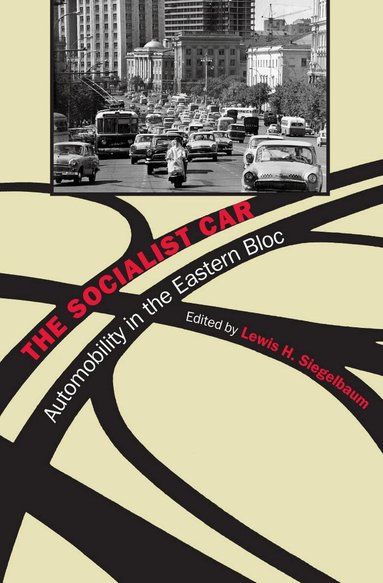
Across the Soviet Bloc, from the 1960s until the collapse of communism, the automobile exemplified the tension between the ideological imperatives of political authorities and the aspirations of ordinary citizens. For the latter, the automobile was the ticket to personal freedom and a piece of the imagined consumer paradise of the West. For the authorities, the personal car was a private, mobile space that challenged the most basic assumptions of the collectivity. The "socialist car"-and the car culture that built up around it-was the result of an always unstable compromise between official ideology, available resources, and the desires of an increasingly restless citizenry. In The Socialist Car, eleven scholars from Europe and North America explore in vivid detail the interface between the motorcar and the state socialist countries of Eastern Europe, including the USSR. In addition to the metal, glass, upholstery, and plastic from which the Ladas, Dacias, Trabants, and other still extant but aging models were fabricated, the socialist car embodied East Europeans' longings and compromises, hopes and disappointments. The socialist car represented both aspirations of overcoming the technological gap between the capitalist first and socialist second worlds and dreams of enhancing personal mobility and status. Certain features of automobility-shortages and privileges, waiting lists and lack of readily available credit, the inadequacy of streets and highways-prevailed across the Soviet Bloc. In this collective history, the authors put aside both ridicule and nostalgia in the interest of trying to understand the socialist car in its own context.
Specifikationer
Fakta
- Vikt
- 0,34 kg
- GTIN
- 09780801477386
Uppgifter från tillverkare och butiker.