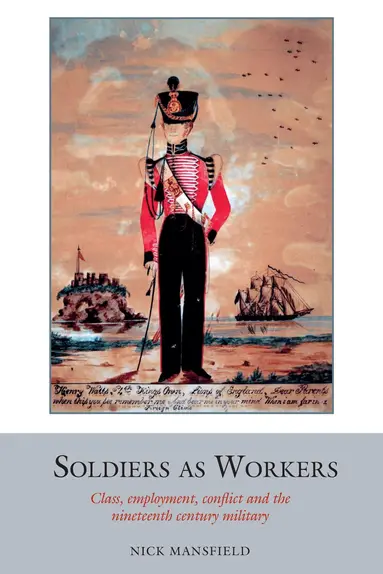
Soldiers as Workers
2 118 kr2 120 kr−0% senaste veckanhos Bokus · exkl. frakt
Jämfört med det lägsta pris vi sett de 30 dagarna före sänkningen.
631 kr skillnad mellan billigaste och dyraste butik i lager
Dubbelkollat idag
Jämför 2 butiker
- Bokus, 2 118 kr, frakt enligt butiken. Till butik (öppnas i ny flik)
I lagerFrakt: se butikenDubbelkollad 05:51
2 118 kr
Lägst
- Akademibokhandeln, 2 749 kr, frakt enligt butiken. Till butik (öppnas i ny flik)
I lagerFrakt: se butikenDubbelkollad 05:53
2 749 kr

Priser från butikernas flöden kan ha ändrats: det är priset hos butiken som gäller, så kontrollera det innan du handlar.
Prishistorik
Köp nu eller vänta?
Just nu kostar produkten 2 118 kr — 12 kr över det lägsta vi sett på 1 månad.
Under den tiden har det oftast legat runt 2 110–2 130 kr.
Pris idag
2 118 kr
- Lägst
- 2 106 kr
- Snitt
- 2 122 kr
- Högst
- 2 138 kr
| 2026-09-15 | 2 106 kr · Lägst hos Bokus |
|---|---|
| 2026-09-19 | 2 117 kr · Lägst hos Bokus |
| 2026-09-20 | 2 112 kr · Lägst hos Bokus |
| 2026-09-23 | 2 114 kr · Lägst hos Bokus |
| 2026-09-27 | 2 107 kr · Lägst hos Bokus |
| 2026-09-30 | 2 110 kr · Lägst hos Bokus |
| 2026-10-03 | 2 125 kr · Lägst hos Bokus |
| 2026-10-04 | 2 134 kr · Lägst hos Bokus |
| 2026-10-10 | 2 137 kr · Lägst hos Bokus |
| 2026-10-11 | 2 134 kr · Lägst hos Bokus |
| 2026-10-12 | 2 120 kr · Lägst hos Bokus |
| 2026-10-16 | 2 133 kr · Lägst hos Bokus |
| 2026-10-17 | 2 128 kr · Lägst hos Bokus |
| 2026-10-18 | 2 126 kr · Lägst hos Bokus |
| 2026-10-20 | 2 125 kr · Lägst hos Bokus |
| 2026-10-24 | 2 130 kr · Lägst hos Bokus |
| 2026-10-27 | 2 135 kr · Lägst hos Bokus |
| 2026-10-30 | 2 138 kr · Lägst hos Bokus |
| 2026-11-01 | 2 118 kr · Lägst hos Bokus |
Om produkten
Soldiers as Workers
Läs merLäs mindre
The book outlines how class is single most important factor in understanding the British army in the period of industrialisation. It challenges the 'ruffians officered by gentlemen' theory of most military histories and demonstrates how service in the ranks was not confined to 'the scum of the earth' but included a cross section of 'respectable' working class men.Common soldiers represent a huge unstudied occupational group. They worked as artisans, servants and dealers, displaying pre-enlistment working class attitudes and evidencing low level class conflict in numerous ways. Soldiers continued as members of the working class after discharge, with military service forming one phase of their careers and overall life experience. After training, most common soldiers had time on their hands and were allowed to work at a wide variety of jobs, analysed here for the first time. Many serving soldiers continued to work as regimental tradesmen, or skilled artificers. Others worked as officers' servants or were allowed to run small businesses, providing goods and services to their comrades. Some, especially the Non Commissioned Officers who actually ran the army, forged extraordinary careers which surpassed any opportunities in civilian life. All the soldiers studied retained much of their working class way of life. This was evidenced in a contract culture similar to that of the civilian trade unions. Within disciplined boundaries, army life resulted in all sorts of low level class conflict. The book explores these by covering drinking, desertion, feigned illness, self harm, strikes and go-slows. It further describes mutinies, back chat, looting, fraternisation, foreign service, suicide and even the shooting of unpopular officers.