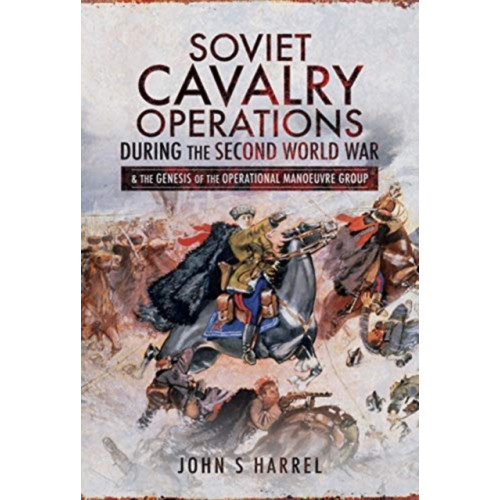
Soviet Cavalry Operations During the Second World War
Bra pris nuLägsta priset på 1 månad
229 kr249 kr−8% senaste veckanhos Buyersclub · exkl. frakt
Jämfört med det lägsta pris vi sett de 30 dagarna före sänkningen.
Dubbelkollade priser
Jämför 2 butiker
- Buyersclub, 229 kr, frakt enligt butiken. Till butik (öppnas i ny flik)
I lagerKampanjFrakt: se butikenDubbelkollad 05:00
229 kr
Lägst
- Adlibris, 313 kr, frakt enligt butiken. Till butik (öppnas i ny flik)
Slut i lagerFrakt: se butikenDubbelkollad 27 okt. 09:10
313 kr


Priser från butikernas flöden kan ha ändrats: det är priset hos butiken som gäller, så kontrollera det innan du handlar.
Prishistorik
Köp nu eller vänta?
Just nu kostar produkten 229 kr — det lägsta vi sett på 1 månad.
Under den tiden har det oftast legat runt 250 kr.
Pris idag
229 kr
- Lägst
- 229 kr
- Snitt
- 257 kr
- Högst
- 313 kr
| 2026-09-15 | 249 kr · Lägst hos Buyersclub |
|---|---|
| 2026-10-09 | 313 kr · Lägst hos Adlibris |
| 2026-10-15 | 249 kr · Lägst hos Buyersclub |
| 2026-10-28 | 229 kr · Lägst hos Buyersclub |
Om produkten
Soviet Cavalry Operations During the Second World War
Läs merLäs mindre
While the development of tanks had largely led to the replacement of cavalry in most armies by 1939, the Soviets retained a strong mounted arm. In the terrain and conditions of the Eastern Front they were able to play an important role denied them elsewhere. John Harrel shows how the Soviets developed a doctrine of deep penetration, using cavalry formations to strike into the Axis rear, disrupting logistics and lines of communication, encircling and isolating units. Interestingly he shows that this doctrine did not stem from the native cavalry tradition of the steppe but from the example of the American Civil War. The American approach was copied by the Russians in WWI and the Russian Civil War, refined by the Soviets in the early stages of World War Two and perfected during the last two years of the war. The Soviet experience demonstrated that deep operations (cavalry raids) against enemy rear echelons set the conditions for victory. Although the last horse-mounted units disappeared