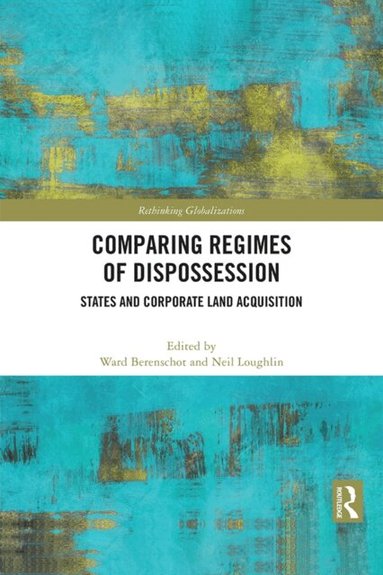
States and Corporate Land Acquisition
Dubbelkollat idag
Jämför 1 butik
- Bokus, 765 kr, frakt enligt butiken. Till butik (öppnas i ny flik)
I lagerFrakt: se butikenDubbelkollad 19:51
765 kr
Lägst

Priser från butikernas flöden kan ha ändrats: det är priset hos butiken som gäller, så kontrollera det innan du handlar.
Prishistorik
Köp nu eller vänta?
Just nu kostar produkten 765 kr — 17 kr över det lägsta vi sett på 2 veckor.
Pris idag
765 kr
- Lägst
- 748 kr
- Snitt
- 757 kr
- Högst
- 765 kr
| 2026-09-30 | 748 kr · Lägst hos Bokus |
|---|---|
| 2026-10-09 | 765 kr · Lägst hos Bokus |
Om produkten
States and Corporate Land Acquisition
Läs merLäs mindre
This book examines how states and corporations across the Global South acquire land, identifying distinct patterns of expropriation and resistance. Across Asia, Africa, and Latin America, economic growth in sectors such as mining, agribusiness, energy, infrastructure, and real estate is driving far-reaching land-use change. Yet the processes of dispossession that underpin these transformations vary considerably. It introduces a comparative framework to explain how legal mechanisms, coercion, and state-business alliances combine in different ways to shape land conflicts.Drawing on detailed case studies-including India's solar parks, Indonesia's palm oil plantations, Cambodia's real estate developments, East Timor's oil and gas projects, and Brazil's land mafias-the contributors highlight three distinct regimes of dispossession: state-led expropriation, curtailed land rights, and decentralised coercion. By comparing these patterns across contexts, the book deepens understanding of how dispossession is organised and resisted, while offering insight into the broader political economy of land-use change.This book is essential reading for scholars, researchers, and students in development studies, political economy, agrarian studies, geography, and sociology. It will also appeal to policymakers, civil society organizations, and activists engaged with land rights, resource governance, and social justice issues in the Global South.The chapters in this book were originally published as a special issue of Globalizations.