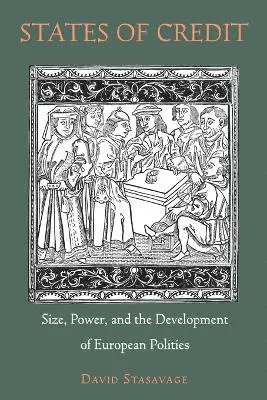
States of Credit
- Vikt 0,33 kg
287 krhos Bokus · exkl. frakt
82 kr skillnad mellan billigaste och dyraste butik i lager
Dubbelkollade priser
Jämför 3 butiker
- Bokus, 287 kr, frakt enligt butiken. Till butik (öppnas i ny flik)
I lagerFrakt: se butikenDubbelkollad 07:51
287 kr
Lägst
- Akademibokhandeln, 369 kr, frakt enligt butiken. Till butik (öppnas i ny flik)
I lagerFrakt: se butikenDubbelkollad 07:53
369 kr
- Adlibris, 376 kr, frakt enligt butiken. Till butik (öppnas i ny flik)
Slut i lagerFrakt: se butikenDubbelkollad 27 okt. 09:10
376 kr


Priser från butikernas flöden kan ha ändrats: det är priset hos butiken som gäller, så kontrollera det innan du handlar.
Prishistorik
Köp nu eller vänta?
Just nu kostar produkten 287 kr — 6 kr över det lägsta vi sett på 1 månad.
Under den tiden har det oftast legat runt 290 kr.
Pris idag
287 kr
- Lägst
- 281 kr
- Snitt
- 287 kr
- Högst
- 292 kr
| 2026-09-15 | 281 kr · Lägst hos Bokus |
|---|---|
| 2026-09-18 | 283 kr · Lägst hos Bokus |
| 2026-09-20 | 284 kr · Lägst hos Bokus |
| 2026-09-21 | 285 kr · Lägst hos Bokus |
| 2026-09-23 | 286 kr · Lägst hos Bokus |
| 2026-09-24 | 285 kr · Lägst hos Bokus |
| 2026-09-27 | 287 kr · Lägst hos Bokus |
| 2026-10-02 | 289 kr · Lägst hos Bokus |
| 2026-10-04 | 290 kr · Lägst hos Bokus |
| 2026-10-06 | 291 kr · Lägst hos Bokus |
| 2026-10-07 | 292 kr · Lägst hos Bokus |
| 2026-10-09 | 290 kr · Lägst hos Bokus |
| 2026-10-13 | 289 kr · Lägst hos Bokus |
| 2026-10-16 | 290 kr · Lägst hos Bokus |
| 2026-10-17 | 289 kr · Lägst hos Bokus |
| 2026-10-20 | 287 kr · Lägst hos Bokus |
| 2026-10-28 | 289 kr · Lägst hos Bokus |
| 2026-11-01 | 287 kr · Lägst hos Bokus |
Om produkten
States of Credit
Läs merLäs mindre
States of Credit provides the first comprehensive look at the joint development of representative assemblies and public borrowing in Europe during the medieval and early modern eras. In this pioneering book, David Stasavage argues that unique advances in political representation allowed certain European states to gain early and advantageous access to credit, but the emergence of an active form of political representation itself depended on two underlying factors: compact geography and a strong mercantile presence. Stasavage shows that active representative assemblies were more likely to be sustained in geographically small polities. These assemblies, dominated by mercantile groups that lent to governments, were in turn more likely to preserve access to credit. Given these conditions, smaller European city-states, such as Genoa and Cologne, had an advantage over larger territorial states, including France and Castile, because mercantile elites structured political institutions in order to effectively monitor public credit.While creditor oversight of public funds became an asset for city-states in need of finance, Stasavage suggests that the long-run implications were more ambiguous. City-states with the best access to credit often had the most closed and oligarchic systems of representation, hindering their ability to accept new economic innovations. This eventually transformed certain city-states from economic dynamos into rentier republics. Exploring the links between representation and debt in medieval and early modern Europe, States of Credit contributes to broad debates about state formation and Europe's economic rise.
Specifikationer
Fakta
- Vikt
- 0,33 kg
- GTIN
- 09780691166735
Uppgifter från tillverkare och butiker.