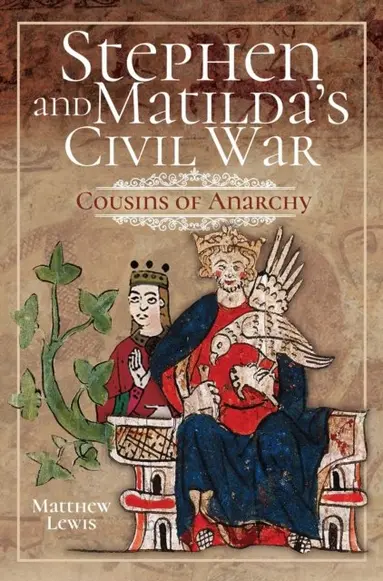
Stephen and Matilda's Civil War
Dubbelkollat idag
Jämför 1 butik
- Bokus, 16 kr, frakt enligt butiken. Till butik (öppnas i ny flik)
I lagerFrakt: se butikenDubbelkollad 11:51
16 kr
Lägst

Priser från butikernas flöden kan ha ändrats: det är priset hos butiken som gäller, så kontrollera det innan du handlar.
Prishistorik
Köp nu eller vänta?
Just nu kostar produkten 16 kr — 1 kr över det lägsta vi sett på 1 månad.
Under den tiden har det oftast legat runt 20–110 kr.
Pris idag
16 kr
- Lägst
- 15 kr
- Snitt
- 80 kr
- Högst
- 150 kr
| 2026-09-15 | 15 kr · Lägst hos Bokus |
|---|---|
| 2026-09-17 | 150 kr · Lägst hos Bokus |
| 2026-09-20 | 104 kr · Lägst hos Bokus |
| 2026-10-06 | 106 kr · Lägst hos Bokus |
| 2026-10-20 | 16 kr · Lägst hos Bokus |
Om produkten
Stephen and Matilda's Civil War
Läs merLäs mindre
The story of the twelfth-century rivalry for the throne between the daughter and the nephew of Henry I-a battle that tore England apart for over a decade.The Anarchy was the first civil war in post-Conquest England, enduring throughout the reign of King Stephen between 1135 and 1154. It ultimately brought about the end of the Norman dynasty and the birth of the mighty Plantagenet kings.When Henry I died having lost his only legitimate son in a shipwreck, his barons had sworn to recognize his daughter Matilda, widow of the Holy Roman Emperor, as his heir, and remarried her to Geoffrey, Count of Anjou. But when she was slow to move to England upon her father''s death, Henry''s favorite nephew, Stephen of Blois, rushed to have himself crowned, much as Henry himself had done on the death of his brother William Rufus.Supported by his brother Henry, Bishop of Winchester, Stephen made a promising start, but Matilda would not give up her birthright and tried to hold the English barons to their oaths. The result was more than a decade of civil war that saw England split apart. Empress Matilda is often remembered as aloof and high-handed, Stephen as ineffective and indecisive. By following both sides of the dispute and seeking to understand their actions and motivations, Matthew Lewis aims to reach a more rounded understanding of this crucial period of English history-and ask to what extent there really was anarchy.