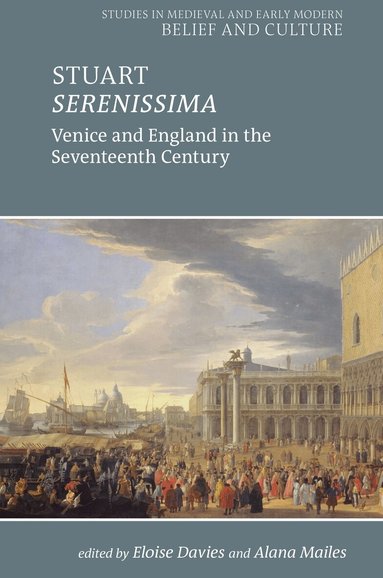
Stuart Serenissima
2 320 krhos Bokus · exkl. frakt
689 kr skillnad mellan billigaste och dyraste butik i lager
Dubbelkollat idag
Jämför 2 butiker
- Bokus, 2 320 kr, frakt enligt butiken. Till butik (öppnas i ny flik)
I lagerFrakt: se butikenDubbelkollad 19:51
2 320 kr
Lägst
- Akademibokhandeln, 3 009 kr, frakt enligt butiken. Till butik (öppnas i ny flik)
I lagerFrakt: se butikenDubbelkollad 19:53
3 009 kr

Priser från butikernas flöden kan ha ändrats: det är priset hos butiken som gäller, så kontrollera det innan du handlar.
Prishistorik
Köp nu eller vänta?
Just nu kostar produkten 2 320 kr — 14 kr över det lägsta vi sett på 2 veckor.
Under den tiden har det oftast legat runt 2 320–2 510 kr.
Pris idag
2 320 kr
- Lägst
- 2 306 kr
- Snitt
- 2 506 kr
- Högst
- 3 259 kr
| 2026-09-27 | 3 259 kr · Lägst hos Akademibokhandeln |
|---|---|
| 2026-09-28 | 2 508 kr · Lägst hos Bokus |
| 2026-10-10 | 2 609 kr · Lägst hos Bokus |
| 2026-10-12 | 2 306 kr · Lägst hos Bokus |
| 2026-10-16 | 2 320 kr · Lägst hos Bokus |
Om produkten
Stuart Serenissima
Läs merLäs mindre
The distinctive relationship between Stuart England and the Republic of Venice played a vital role in some of the most important developments of the early modern period, including the globalisation of maritime trading empires and the increasing repudiation of papal power. Stuart Serenissima explores this significant moment of heightened exchange between the two states, bringing together - for the first time in a single collection - insights from leading scholars in the fields of cultural history, economic history, musicology, political theory, art history, and literary studies. Across the volume's nine chapters, the authors make the collective case that the true extent and significance of seventeenth-century Anglo-Venetian relations can only be understood from a multidisciplinary perspective. The collection offers a nuanced account of interactions between subjects of both polities, analysing intra-confessional division as a driver of European politics, illuminating the lesser studied contributions of women and non-elite agents, and highlighting the cultural brokerage of intermediaries who unsettle notions of a purely bilateral Anglo-Venetian rapport. By locating the Anglo-Venetian Seicento within a broader web of transnational and global connections, the authors identify the early modern Mediterranean as a site of consequential imperial experiments and set the agenda for future Anglo-Venetian research.