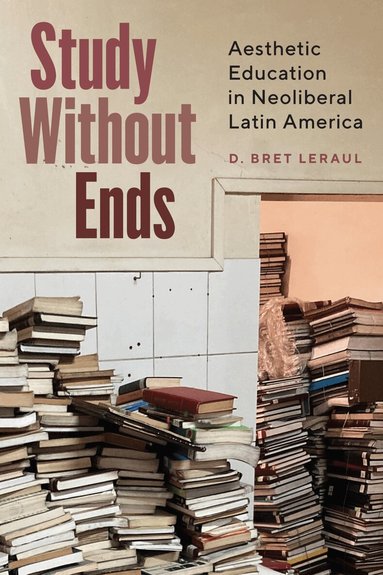
Study Without Ends
428 krhos Bokus · exkl. frakt
131 kr skillnad mellan billigaste och dyraste butik i lager
Dubbelkollat idag
Jämför 2 butiker
- Bokus, 428 kr, frakt enligt butiken. Till butik (öppnas i ny flik)
I lagerFrakt: se butikenDubbelkollad 05:51
428 kr
Lägst
- Akademibokhandeln, 559 kr, frakt enligt butiken. Till butik (öppnas i ny flik)
I lagerFrakt: se butikenDubbelkollad 05:53
559 kr

Priser från butikernas flöden kan ha ändrats: det är priset hos butiken som gäller, så kontrollera det innan du handlar.
Prishistorik
Köp nu eller vänta?
Just nu kostar produkten 428 kr — 9 kr över det lägsta vi sett på 1 månad.
Under den tiden har det oftast legat runt 420–430 kr.
Pris idag
428 kr
- Lägst
- 419 kr
- Snitt
- 426 kr
- Högst
- 549 kr
| 2026-09-16 | 549 kr · Lägst hos Akademibokhandeln |
|---|---|
| 2026-09-17 | 419 kr · Lägst hos Bokus |
| 2026-10-09 | 428 kr · Lägst hos Bokus |
Om produkten
Study Without Ends
Läs merLäs mindre
Calls for aesthetic education to unite cultural practices of radical imagination with everyday practices of careWhile Latin America was neoliberalism's laboratory, Argentina and Chile have been crucibles for its cultural logics. In this book, D. Bret Leraul examines the rise of neoliberal culture in the Southern Cone through the educational infrastructures that disseminate and reproduce it. Leraul draws on literature and criticism, the history of higher education, and examples of recent social movements to propose a theory of cultural production for social transformation.Study Without Ends charts the cultural consequences of introducing a neoliberal rationality into the region's higher education landscape. The university's increasing centrality within the literary institution and the rise of theoretical prose fiction suggest that poetics today is less about crafting literary works than instructing readers. At the same time, despite efforts to reduce education to human capital investment, it remains a process of personal and social transformation, as recent activism by Chilean students and Argentinean unemployed workers shows. In response to the compounding crises of social reproduction represented by the informal work and precarious livelihoods of people rendered surplus populations, and inspired by the decommodified labor of students, artists, women, and the unemployed, Leraul calls for a materialist aesthetic education that unites artistic culture's practices of radical imagination and everyday culture's practices of care.