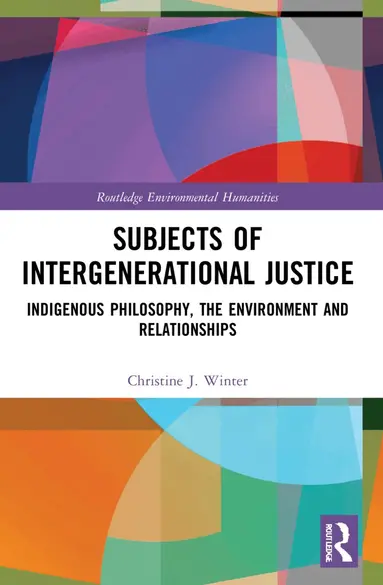
Subjects of Intergenerational Justice
- Vikt 0,56 kg
688 krhos Bokus · exkl. frakt
211 kr skillnad mellan billigaste och dyraste butik i lager
Dubbelkollat idag
Jämför 2 butiker
- Bokus, 688 kr, frakt enligt butiken. Till butik (öppnas i ny flik)
I lagerFrakt: se butikenDubbelkollad 12:51
688 kr
Lägst
- Akademibokhandeln, 899 kr, frakt enligt butiken. Till butik (öppnas i ny flik)
I lagerFrakt: se butikenDubbelkollad 12:53
899 kr

Priser från butikernas flöden kan ha ändrats: det är priset hos butiken som gäller, så kontrollera det innan du handlar.
Prishistorik
Köp nu eller vänta?
Just nu kostar produkten 688 kr — 10 kr över det lägsta vi sett på 1 månad.
Under den tiden har det oftast legat runt 680–690 kr.
Pris idag
688 kr
- Lägst
- 678 kr
- Snitt
- 687 kr
- Högst
- 695 kr
| 2026-09-15 | 685 kr · Lägst hos Bokus |
|---|---|
| 2026-09-17 | 682 kr · Lägst hos Bokus |
| 2026-09-20 | 680 kr · Lägst hos Bokus |
| 2026-09-23 | 681 kr · Lägst hos Bokus |
| 2026-09-25 | 679 kr · Lägst hos Bokus |
| 2026-09-27 | 678 kr · Lägst hos Bokus |
| 2026-09-30 | 680 kr · Lägst hos Bokus |
| 2026-10-04 | 687 kr · Lägst hos Bokus |
| 2026-10-07 | 694 kr · Lägst hos Bokus |
| 2026-10-11 | 691 kr · Lägst hos Bokus |
| 2026-10-12 | 689 kr · Lägst hos Bokus |
| 2026-10-17 | 692 kr · Lägst hos Bokus |
| 2026-10-18 | 691 kr · Lägst hos Bokus |
| 2026-10-22 | 690 kr · Lägst hos Bokus |
| 2026-10-28 | 695 kr · Lägst hos Bokus |
| 2026-10-30 | 693 kr · Lägst hos Bokus |
| 2026-10-31 | 690 kr · Lägst hos Bokus |
| 2026-11-01 | 688 kr · Lägst hos Bokus |
Om produkten
Subjects of Intergenerational Justice
Läs merLäs mindre
This book challenges mainstream Western IEJ (intergenerational environmental justice) in a manner that privileges indigenous philosophies and highlights the value these philosophies have for solving global environmental problems.Divided into three parts, the book begins by examining the framing of Western liberal environmental, intergenerational and indigenous justice theory and reviews decolonial theory. Using contemporary case studies drawn from the courts, film, biography and protests actions, the second part explores contemporary Māori and Aboriginal experiences of values-conflict in encounters with politics and law. It demonstrates the deep ontological rifts between the philosophies that inform Māori and Aboriginal intergenerational justice (IJ) and those of the West that underpin the politics and law of these two settler states. Existing Western IEJ theories, across distributional, communitarian, human rights based and the capabilities approach to IJ, are tested against obligations and duties of specific Māori and Aboriginal iwi and clans. Finally, in the third part, it explores the ways we relate to time and across generations to create regenerative IJ. Challenging the previous understanding of the conceptualization of time, it posits that it is in how we relate-human to human, human to nonhuman, nonhuman to human-that robust conceptualization of IEJ emerges. This volume presents an imagining of IEJ which accounts for indigenous norms on indigenous terms and explores how this might be applied in national and international responses to climate change and environmental degradation.Demonstrating how assumptions in mainstream justice theory continue to colonise indigenous people and render indigenous knowledge invisible, this book will be of great interest to students and scholars of environmental and intergenerational philosophy, political theory, indigenous studies and decolonial studies, and environmental humanities more broadly.
Specifikationer
Fakta
- Vikt
- 0,56 kg
- GTIN
- 09780367563776
Uppgifter från tillverkare och butiker.