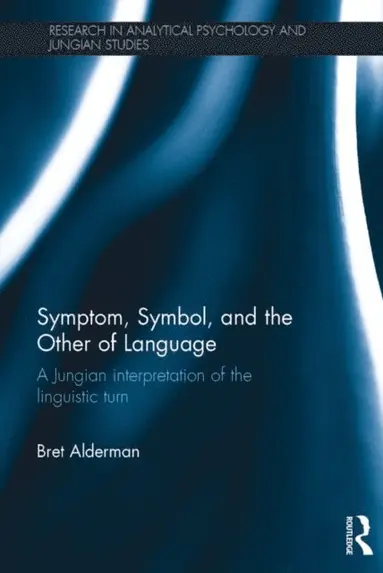
Symptom, Symbol, and the Other of Language
Dubbelkollat idag
Jämför 1 butik
- Bokus, 791 kr, frakt enligt butiken. Till butik (öppnas i ny flik)
I lagerFrakt: se butikenDubbelkollad 01:51
791 kr
Lägst

Priser från butikernas flöden kan ha ändrats: det är priset hos butiken som gäller, så kontrollera det innan du handlar.
Prishistorik
Köp nu eller vänta?
Just nu kostar produkten 791 kr — 17 kr över det lägsta vi sett på 1 månad.
Pris idag
791 kr
- Lägst
- 774 kr
- Snitt
- 784 kr
- Högst
- 791 kr
| 2026-09-15 | 774 kr · Lägst hos Bokus |
|---|---|
| 2026-10-05 | 791 kr · Lägst hos Bokus |
Om produkten
Symptom, Symbol, and the Other of Language
Läs merLäs mindre
Every statement about language is also a statement by and about psyche. Guided by this primary assumption, and inspired by the works of Carl Jung, in Symptom, Symbol, and the Other of Language, Bret Alderman delves deep into the symbolic and symptomatic dimensions of a deconstructive postmodernism infatuated with semiotics and the workings of linguistic signs. This book offers an important exploration of linguistic reference and representation through a Jungian understanding of symptom and symbol, using techniques including amplification, dream interpretation, and symbolic attitude. Focusing on Ferdinand de Saussure, Jacques Derrida, Michel Foucault, and Richard Rorty, Alderman examines the common belief that words and their meaning are grounded purely in language, instead envisioning a symptomatic expression of alienation and collective dissociation. Drawing upon the nascent field of ecopsychology, the modern disciplines of phenomenology and depth psychology, and the ancient knowledge of myth and animistic cosmologies, Alderman dares us to re-imagine some of the more sacrosanct concepts of the contemporary intellectual milieu informed by semiotics and the linguistic turn. Symptom, Symbol, and the Other of Language is essential reading for academics and students engaged in the study of depth psychology. However, the interdisciplinary approach of the work ensures that it will also be of great interest to those researching and studying in the areas of ethology, ecopsychology, philosophy, linguistics and mythology.