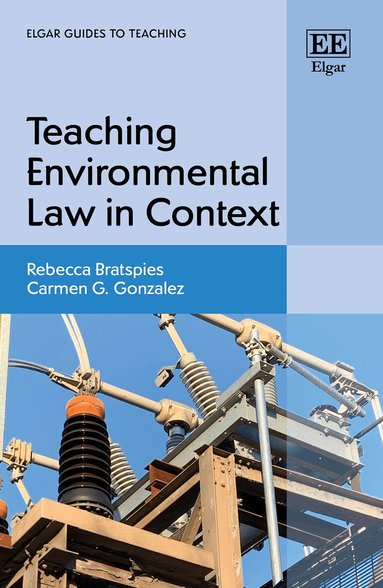
Teaching Environmental Law in Context
491 krhos Bokus · exkl. frakt
148 kr skillnad mellan billigaste och dyraste butik i lager
Dubbelkollat idag
Jämför 2 butiker
- Bokus, 491 kr, frakt enligt butiken. Till butik (öppnas i ny flik)
I lagerFrakt: se butikenDubbelkollad 21:51
491 kr
Lägst
- Akademibokhandeln, 639 kr, frakt enligt butiken. Till butik (öppnas i ny flik)
I lagerFrakt: se butikenDubbelkollad 21:53
639 kr

Priser från butikernas flöden kan ha ändrats: det är priset hos butiken som gäller, så kontrollera det innan du handlar.
Prishistorik
Köp nu eller vänta?
Pris idag
491 kr
- Lägst
- 490 kr
- Snitt
- 520 kr
- Högst
- 639 kr
| 2026-10-12 | 639 kr · Lägst hos Akademibokhandeln |
|---|---|
| 2026-10-13 | 490 kr · Lägst hos Bokus |
| 2026-10-16 | 491 kr · Lägst hos Bokus |
Om produkten
Teaching Environmental Law in Context
Läs merLäs mindre
This highly-informative book provides tools and guidance for teaching environmental law in a time of turmoil. Rebecca Bratspies and Carmen Gonzalez clarify key, often unexplored, first principles behind environmental regulation, enabling teachers to confidently navigate the material and enhance their expertise.The authors trace the crucial history of each major federal environmental statute and provide an accessible overview of each statute's major provisions. By integrating a statute's social and political context with its regulatory structure, they demonstrate how to incorporate environmental justice throughout a course and help students understand the life-and-death stakes behind seemingly technical regulatory choices. Each chapter includes practical teaching exercises that integrate history, justice, science, and law into classroom learning. Above all, Bratspies and Gonzalez offer numerous practical examples. Each chapter is full of teaching tips and problems designed to start hard, interesting conversations, allowing students to master technical materials while grappling with social justice implications. Teaching Environmental Law in Context is an essential read for educators interested in bringing environmental justice into their classrooms or developing comparative and interdisciplinary courses in environmental law and policy. It is a valuable reference for government officials and activists looking to gain insight into environmental advocacy strategies. Scholars and students seeking concise summaries of foundational topics in environmental law will also find this book relevant.