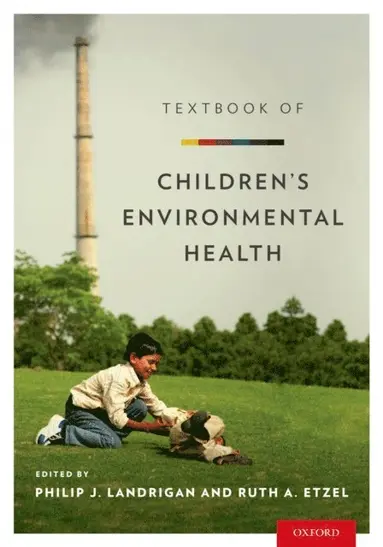
Textbook of Children's Environmental Health
Dubbelkollat idag
Jämför 1 butik
- Bokus, 1 360 kr, frakt enligt butiken. Till butik (öppnas i ny flik)
I lagerFrakt: se butikenDubbelkollad 01:51
1 360 kr
Lägst

Priser från butikernas flöden kan ha ändrats: det är priset hos butiken som gäller, så kontrollera det innan du handlar.
Prishistorik
Köp nu eller vänta?
Just nu kostar produkten 1 360 kr — 95 kr över det lägsta vi sett på 1 månad.
Pris idag
1 360 kr
- Lägst
- 1 265 kr
- Snitt
- 1 307 kr
- Högst
- 1 360 kr
| 2026-09-15 | 1 265 kr · Lägst hos Bokus |
|---|---|
| 2026-10-11 | 1 360 kr · Lägst hos Bokus |
Om produkten
Textbook of Children's Environmental Health
Läs merLäs mindre
Over the past four decades, the prevalence of autism, asthma, ADHD, obesity, diabetes, and birth defects have grown substantially among children around the world. Not coincidentally, more than 80,000 new chemicals have been developed and released into the global environment during this same period. Today the World Health Organization attributes 36% of all childhood deaths to environmental causes. Children''s environmental health is a new and expanding discipline that studies the profound impact of chemical and environmental hazards on child health. Amid mounting evidence that children are exquisitely sensitive to their environment-and that exposure during their developmental "windows of susceptibility" can trigger cellular changes that lead to disease and disability in infancy, childhood, and across the life span-there is a compelling need for continued scientific study of the relationship between children''s health and environment. The Textbook of Children''s Environmental Health codifies the knowledge base and offers an authoritative and comprehensive guide to this important new field. Edited by two internationally recognized pioneers in the area, this volume presents up-to-date information on the chemical, biological, physical, and societal hazards that confront children in today''s world: pesticides, indoor and outdoor air pollution, lead, arsenic, phthalates, bisphenol A, brominated flame retardants, ionizing radiation, electromagnetic fields, and the built environment. It presents carefully documented data on rising rates of disease in children, offers a critical summary of new research linking pediatric disease with environmental exposures, and explores the cellular, molecular, and epigenetic mechanisms underlying diseases of environmental origin. With this volume''s emphasis upon integrating theory and practice, readers will find practical approaches to channeling scientific findings into evidence-based strategies for preventing and identifying the environmental hazards that cause disease in children. It is a landmark work that will serve as the field''s benchmark for years to come.