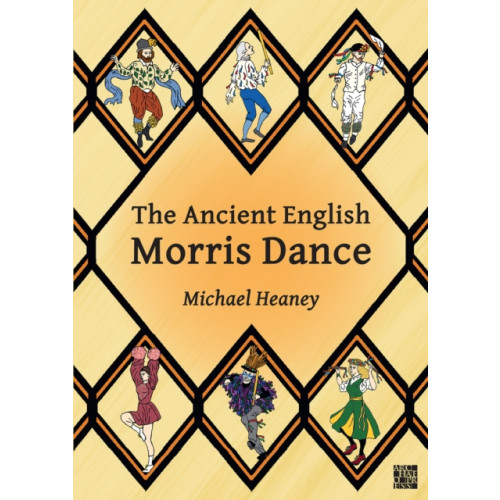
The Ancient English Morris Dance
Bra pris nuLägsta priset på 1 månad
429 krhos Buyersclub · exkl. frakt
62 kr skillnad mellan billigaste och dyraste butik i lager
Dubbelkollade priser
Jämför 2 butiker
- Buyersclub, 429 kr, frakt enligt butiken. Till butik (öppnas i ny flik)
I lagerFrakt: se butikenDubbelkollad 22 okt. 06:26
429 kr
Lägst
- Adlibris, 491 kr, frakt enligt butiken. Till butik (öppnas i ny flik)
I lagerFrakt: se butikenDubbelkollad 06:10
491 kr


Priser från butikernas flöden kan ha ändrats: det är priset hos butiken som gäller, så kontrollera det innan du handlar.
Prishistorik
Köp nu eller vänta?
Just nu kostar produkten 429 kr — det lägsta vi sett på 1 månad.
Under den tiden har det oftast legat runt 430–490 kr.
Pris idag
429 kr
- Lägst
- 429 kr
- Snitt
- 455 kr
- Högst
- 491 kr
| 2026-09-09 | 429 kr · Lägst hos Buyersclub |
|---|---|
| 2026-09-16 | 485 kr · Lägst hos Adlibris |
| 2026-09-17 | 491 kr · Lägst hos Adlibris |
| 2026-09-20 | 429 kr · Lägst hos Buyersclub |
| 2026-09-30 | 491 kr · Lägst hos Adlibris |
| 2026-10-05 | 429 kr · Lägst hos Buyersclub |
| 2026-10-11 | 491 kr · Lägst hos Adlibris |
| 2026-10-21 | 429 kr · Lägst hos Buyersclub |
Om produkten
The Ancient English Morris Dance
Läs merLäs mindre
The idea that morris dancing captures the essence of ancient Englishness, inherently carefree and merry, has been present for over 400 years. The Ancient English Morris Dance traces the history of those attitudes, from the dance's introduction to England in the fifteenth century, through the contention of the Reformation and Civil War, during which morris dancing and maypoles became potent symbols of the older ways of living. Thereafter it developed and diversified, neglected and disdained, until antiquaries began to take an interest in its history, leading to its re-invention as emblematic of Victorian concepts of Merrie England in the nineteenth century. The quest for authentic understanding of what that meant led to its revival at the beginning of the twentieth century, but that was predicated on the perception of it as part of England's declining rural past, to the neglect of the one area (the industrial north-west) where it continued to flourish. The revival led in turn to its