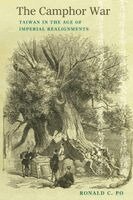
The Camphor War
Bra pris nuLägsta priset på 2 veckor
404 kr529 kr−23% senaste veckanhos Bokus · exkl. frakt
Jämfört med det lägsta pris vi sett de 30 dagarna före sänkningen.
125 kr skillnad mellan billigaste och dyraste butik i lager
Dubbelkollat idag
Jämför 2 butiker
- Bokus, 404 kr, frakt enligt butiken. Till butik (öppnas i ny flik)
I lagerFrakt: se butikenDubbelkollad 17:51
404 kr
Lägst
- Akademibokhandeln, 529 kr, frakt enligt butiken. Till butik (öppnas i ny flik)
I lagerFrakt: se butikenDubbelkollad 17:53
529 kr

Priser från butikernas flöden kan ha ändrats: det är priset hos butiken som gäller, så kontrollera det innan du handlar.
Prishistorik
Köp nu eller vänta?
Just nu kostar produkten 404 kr — det lägsta vi sett på 2 veckor.
Under den tiden har det oftast legat runt 610–640 kr.
Pris idag
404 kr
- Lägst
- 404 kr
- Snitt
- 606 kr
- Högst
- 799 kr
| 2026-09-29 | 799 kr · Lägst hos Akademibokhandeln |
|---|---|
| 2026-09-30 | 613 kr · Lägst hos Bokus |
| 2026-10-05 | 635 kr · Lägst hos Bokus |
| 2026-10-14 | 529 kr · Lägst hos Akademibokhandeln |
| 2026-10-15 | 404 kr · Lägst hos Bokus |
Om produkten
The Camphor War
Läs merLäs mindre
The First Opium War is remembered as the defining conflict between Britain and China in the nineteenth century. In stark contrast, the Camphor War of 1868 has faded into obscurity. Lasting for only a few weeks, the clash arose from British interests in breaking the Qing monopoly over the lucrative trade in camphor, which was cultivated in Taiwan and widely used for medicinal purposes. Despite its small scale, the war brought to light shifting dynamics in China and Taiwan's engagement with the world.Examining this little-known conflict, Ronald C. Po shows how the Qing and British empires evolved during a period of imperial reconfigurations and border realignments. The Qing adopted more active approaches to controlling their frontiers, regulating trade, and responding to foreign aggression. Situating the war in the early decades of the Self-Strengthening Movement, Po demonstrates how the Qing state reshaped Taiwan from a frontier into a political landscape of negotiation, as well as how camphor became both an object of intense commercial interest and a means for power contests. By centering on this seemingly peripheral war, the book shifts focus from grand confrontations to the subtler mechanisms through which empires adjusted, faltered, and realigned. Synthesizing maritime, commodity, environmental, and imperial history, The Camphor War complicates static notions of empire and reveals Taiwan's importance in nineteenth-century East Asia.