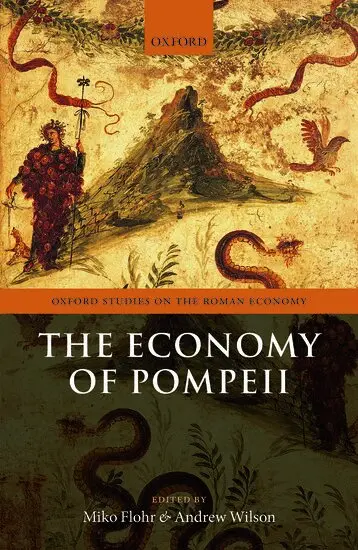
The Economy of Pompeii
- Vikt 0,9 kg
2 092 krhos Bokus · exkl. frakt
627 kr skillnad mellan billigaste och dyraste butik i lager
Dubbelkollade priser
Jämför 3 butiker
- Bokus, 2 092 kr, frakt enligt butiken. Till butik (öppnas i ny flik)
I lagerFrakt: se butikenDubbelkollad 08:51
2 092 kr
Lägst
- Akademibokhandeln, 2 719 kr, frakt enligt butiken. Till butik (öppnas i ny flik)
I lagerFrakt: se butikenDubbelkollad 08:53
2 719 kr
- Adlibris, 1 535 kr, frakt enligt butiken. Till butik (öppnas i ny flik)
Slut i lagerFrakt: se butikenDubbelkollad 27 okt. 09:10
1 535 kr


Priser från butikernas flöden kan ha ändrats: det är priset hos butiken som gäller, så kontrollera det innan du handlar.
Prishistorik
Köp nu eller vänta?
Just nu kostar produkten 2 092 kr — 576 kr över det lägsta vi sett på 1 månad.
Under den tiden har det oftast legat runt 1 540–2 090 kr.
Pris idag
2 092 kr
- Lägst
- 1 516 kr
- Snitt
- 1 833 kr
- Högst
- 2 092 kr
| 2026-09-15 | 1 516 kr · Lägst hos Adlibris |
|---|---|
| 2026-09-16 | 1 535 kr · Lägst hos Adlibris |
| 2026-10-04 | 2 047 kr · Lägst hos Bokus |
| 2026-10-05 | 1 535 kr · Lägst hos Adlibris |
| 2026-10-08 | 2 047 kr · Lägst hos Bokus |
| 2026-10-11 | 2 092 kr · Lägst hos Bokus |
Om produkten
The Economy of Pompeii
Läs merLäs mindre
This volume presents fourteen papers by Roman archaeologists and historians discussing approaches to the economic history of Pompeii, and the role of the Pompeian evidence in debates about the Roman economy. Four themes are discussed. The first of these is the position of Pompeii and its agricultural environment, discussing the productivity and specialization of agriculture in the Vesuvian region, and the degree to which we can explain Pompeii's size and wealth on the basis of the city's economic hinterland. A second issue discussed is what Pompeians got out of their economy: how well-off were people in Pompeii? This involves discussing the consumption of everyday consumer goods, analyzing archaeobotanical remains to highlight the quality of Pompeian diets, and discussing what bone remains reveal about the health of the inhabitants of Pompeii. A third theme is economic life in the city: how are we to understand the evidence for crafts and manufacturing? How are we to assess Pompeii's commercial topography? Who were the people who actually invested in constructing shops and workshops? In which economic contexts were Pompeian paintings produced? Finally, the volume discusses money and business: how integrated was Pompeii into the wider world of commerce and exchange, and what can the many coins found at Pompeii tell us about this? What do the wax tablets found near Pompeii tell us about trade in the Bay of Naples in the first century AD? Together, the chapters of this volume highlight how Pompeii became a very rich community, and how it profited from its position in the centre of the Roman world.
Specifikationer
Fakta
- Vikt
- 0,9 kg
- GTIN
- 09780198786573
Uppgifter från tillverkare och butiker.