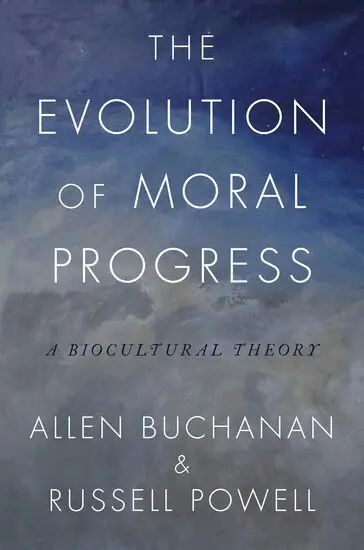
The Evolution of Moral Progress
- Vikt 0,7 kg
598 krhos Bokus · exkl. frakt
181 kr skillnad mellan billigaste och dyraste butik i lager
Dubbelkollat idag
Jämför 2 butiker
- Bokus, 598 kr, frakt enligt butiken. Till butik (öppnas i ny flik)
I lagerFrakt: se butikenDubbelkollad 14:51
598 kr
Lägst
- Akademibokhandeln, 779 kr, frakt enligt butiken. Till butik (öppnas i ny flik)
I lagerFrakt: se butikenDubbelkollad 14:53
779 kr

Priser från butikernas flöden kan ha ändrats: det är priset hos butiken som gäller, så kontrollera det innan du handlar.
Prishistorik
Köp nu eller vänta?
Just nu kostar produkten 598 kr — 13 kr över det lägsta vi sett på 1 månad.
Pris idag
598 kr
- Lägst
- 585 kr
- Snitt
- 591 kr
- Högst
- 598 kr
| 2026-09-15 | 585 kr · Lägst hos Bokus |
|---|---|
| 2026-10-11 | 598 kr · Lägst hos Bokus |
Om produkten
The Evolution of Moral Progress
Läs merLäs mindre
In The Evolution of Moral Progress, Allen Buchanan and Russell Powell resurrect the project of explaining moral progress. They avoid the errors of earlier attempts by drawing on a wide range of disciplines including moral and political philosophy, evolutionary biology, evolutionary psychology, anthropology, history, and sociology. Their focus is on one especially important type of moral progress: gains in inclusivity. They develop a framework to explain progress in inclusivity to also illuminate moral regression--the return to exclusivist and "tribalistic" moral beliefs and attitudes. Buchanan and Powell argue those tribalistic moral responses are not hard-wired by evolution in human nature. Rather, human beings have an evolved "adaptively plastic" capacity for both inclusion and exclusion, depending on environmental conditions. Moral progress in the dimension of inclusivity is possible, but only to the extent that human beings can create environments conducive to extending moral standing to all human beings and even to some animals. Buchanan and Powell take biological evolution seriously, but with a critical eye, while simultaneously recognizing the crucial role of culture in creating environments in which moral progress can occur. The book avoids both biological and cultural determinism. Unlike earlier theories of moral progress, their theory provides a naturalistic account that is grounded in the best empirical work, and unlike earlier theories it does not present moral progress as inevitable or as occurring in definite stages; but rather it recognizes the highly contingent and fragile character of moral improvement.
Specifikationer
Fakta
- Vikt
- 0,7 kg
- GTIN
- 09780190868413
Uppgifter från tillverkare och butiker.