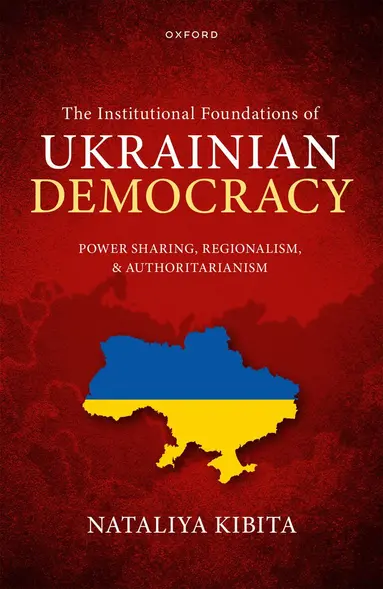
The Institutional Foundations of Ukrainian Democracy
- Vikt 0,8 kg
1 843 krhos Bokus · exkl. frakt
556 kr skillnad mellan billigaste och dyraste butik i lager
Dubbelkollat idag
Jämför 2 butiker
- Bokus, 1 843 kr, frakt enligt butiken. Till butik (öppnas i ny flik)
I lagerFrakt: se butikenDubbelkollad 11:51
1 843 kr
Lägst
- Akademibokhandeln, 2 399 kr, frakt enligt butiken. Till butik (öppnas i ny flik)
I lagerFrakt: se butikenDubbelkollad 11:53
2 399 kr

Priser från butikernas flöden kan ha ändrats: det är priset hos butiken som gäller, så kontrollera det innan du handlar.
Prishistorik
Köp nu eller vänta?
Just nu kostar produkten 1 843 kr — 40 kr över det lägsta vi sett på 1 månad.
Pris idag
1 843 kr
- Lägst
- 1 803 kr
- Snitt
- 1 826 kr
- Högst
- 1 843 kr
| 2026-09-15 | 1 803 kr · Lägst hos Bokus |
|---|---|
| 2026-10-06 | 1 843 kr · Lägst hos Bokus |
Om produkten
The Institutional Foundations of Ukrainian Democracy
Läs merLäs mindre
Ukraine and Russia are today at opposite points of the political spectrum: Despite 300 years of contact with Russian authoritarian politics, Ukraine's post-independence period has been characterised by pluralism. To explain why and how Ukraine's and Russia's paths diverged, this monograph investigates the century-long and Soviet origins of regionalism in Ukraine, which the author argues are at the foundation of the modern Ukrainian institutional system. Drawing on unused archival material, the book re-examines the relationship between Moscow, Kyiv, and the Ukrainian regions in the period from spring 1917 to summer 1994 to demonstrate how interlinked political and economic incentives and constraints determined the opportunities and institutional interests of both the Ukrainian leadership and those of the Ukrainian regions, and how this institutional framework affected in turn the dynamic of the relationship between the central leadership in Moscow, the Ukrainian leadership, and the regions. The result - weak central authority and pronounced regionalism - was Ukraine's Soviet legacy, and the established power of regional clans made (post-Soviet) Ukrainian politics resistant to Russian?style authoritarianism, even when the Soviet centralised party-state system collapsed. This innovative and wide-ranging approach to the history of economic management highlights the importance of considering long-term historical trends for understanding both the complicated nature of Soviet institutions and their varied and contested legacies across post-Soviet space.
Specifikationer
Fakta
- Vikt
- 0,8 kg
- GTIN
- 09780192898814
Uppgifter från tillverkare och butiker.