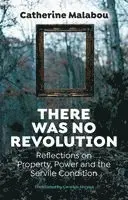
There Was No Revolution
- Vikt 0,29 kg
Bra pris nuLägsta priset på 1 månad
224 krhos Bokus · exkl. frakt
65 kr skillnad mellan billigaste och dyraste butik i lager
Dubbelkollade priser
Jämför 3 butiker
- Bokus, 224 kr, frakt enligt butiken. Till butik (öppnas i ny flik)
I lagerFrakt: se butikenDubbelkollad 20:51
224 kr
Lägst
- Akademibokhandeln, 289 kr, frakt enligt butiken. Till butik (öppnas i ny flik)
I lagerFrakt: se butikenDubbelkollad 20:53
289 kr
- Adlibris, 224 kr plus 35 kr frakt. Till butik (öppnas i ny flik)
Slut i lagerFrakt 35 krDubbelkollad 27 okt. 09:10
224 kr


Priser från butikernas flöden kan ha ändrats: det är priset hos butiken som gäller, så kontrollera det innan du handlar.
Prishistorik
Köp nu eller vänta?
Just nu kostar produkten 224 kr — det lägsta vi sett på 1 månad.
Under den tiden har det oftast legat runt 220–230 kr.
Pris idag
224 kr
- Lägst
- 224 kr
- Snitt
- 225 kr
- Högst
- 231 kr
| 2026-09-15 | 224 kr · Lägst hos Bokus |
|---|---|
| 2026-09-22 | 224 kr · Lägst hos Adlibris |
| 2026-09-25 | 226 kr · Lägst hos Adlibris |
| 2026-09-30 | 224 kr · Lägst hos Bokus |
| 2026-10-12 | 230 kr · Lägst hos Bokus |
| 2026-10-14 | 224 kr · Lägst hos Bokus |
| 2026-10-20 | 231 kr · Lägst hos Bokus |
| 2026-10-22 | 230 kr · Lägst hos Bokus |
| 2026-10-24 | 231 kr · Lägst hos Bokus |
| 2026-10-26 | 224 kr · Lägst hos Bokus |
Om produkten
There Was No Revolution
Läs merLäs mindre
In her new book, Catherine Malabou argues that the French Revolution existed in name only, not in reality - privileges disappeared only on the surface and the old forms of domination persisted in structuring everyday life. And, sure enough, French citizens soon came to ask: "How is it that we are falling back into the same patterns of privilege and servitude?"In developing this argument, Malabou echoes the conclusion drawn by Pierre-Joseph Proudhon, whose work, What is Property?, written in 1840, claimed that there was no revolution. Proudhon witnessed how, in the aftermath of the French Revolution, feudal relations persisted and monarchy was restored. He connected the persistence of feudalism and servitude to his critique of property. For Proudhon, property is but another name for domination: "Property is theft," he famously declared; by which he meant that private property starts with a theft of memory and meaning that transforms continuous bondage into a promise of emancipation. This marks the specificity of the anarchist critique of property, and it led Proudhon to conclude "I am an anarchist."Malabou connects her re-reading of Proudhon's masterpiece with our own political situation today, more than two hundred years after the French Revolution. She examines how the enduring domination that is central to private property infiltrates various aspects of the modern world, from the legacies of colonialism and slavery to work and politics. This timely re-assessment of the relation between property and domination will be of interest to students of philosophy and politics, and to anyone concerned with today's key political questions.
Specifikationer
Fakta
- Vikt
- 0,29 kg
- GTIN
- 09781509567577
Uppgifter från tillverkare och butiker.