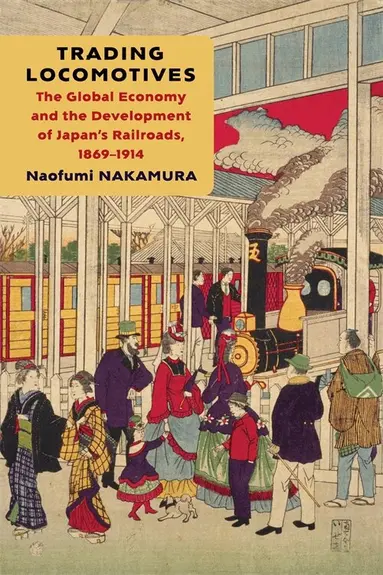
Trading Locomotives
- Vikt 0,37 kg
359 krhos Bokus · exkl. frakt
110 kr skillnad mellan billigaste och dyraste butik i lager
Dubbelkollat idag
Jämför 2 butiker
- Bokus, 359 kr, frakt enligt butiken. Till butik (öppnas i ny flik)
I lagerFrakt: se butikenDubbelkollad 09:51
359 kr
Lägst
- Akademibokhandeln, 469 kr, frakt enligt butiken. Till butik (öppnas i ny flik)
I lagerFrakt: se butikenDubbelkollad 09:53
469 kr

Priser från butikernas flöden kan ha ändrats: det är priset hos butiken som gäller, så kontrollera det innan du handlar.
Prishistorik
Köp nu eller vänta?
Just nu kostar produkten 359 kr — 6 kr över det lägsta vi sett på 1 månad.
Under den tiden har det oftast legat runt 360–480 kr.
Pris idag
359 kr
- Lägst
- 353 kr
- Snitt
- 415 kr
- Högst
- 475 kr
| 2026-09-15 | 475 kr · Lägst hos Bokus |
|---|---|
| 2026-09-18 | 459 kr · Lägst hos Akademibokhandeln |
| 2026-09-19 | 353 kr · Lägst hos Bokus |
| 2026-09-21 | 475 kr · Lägst hos Bokus |
| 2026-09-25 | 459 kr · Lägst hos Akademibokhandeln |
| 2026-09-26 | 356 kr · Lägst hos Bokus |
| 2026-09-28 | 357 kr · Lägst hos Bokus |
| 2026-10-02 | 359 kr · Lägst hos Bokus |
| 2026-10-03 | 475 kr · Lägst hos Bokus |
| 2026-10-12 | 469 kr · Lägst hos Akademibokhandeln |
| 2026-10-13 | 359 kr · Lägst hos Bokus |
| 2026-10-16 | 360 kr · Lägst hos Bokus |
| 2026-10-18 | 475 kr · Lägst hos Bokus |
| 2026-10-22 | 469 kr · Lägst hos Akademibokhandeln |
| 2026-10-23 | 358 kr · Lägst hos Bokus |
| 2026-10-24 | 356 kr · Lägst hos Bokus |
| 2026-10-27 | 358 kr · Lägst hos Bokus |
| 2026-10-28 | 359 kr · Lägst hos Bokus |
Om produkten
Trading Locomotives
Läs merLäs mindre
Special Award, 2026 Masayoshi Ohira Memorial PrizeThe proliferation of railroads around the world was integral to the emergence of a global market-based economy at the turn of the twentieth century. This deeply researched and comprehensive book examines the history of rail in Japan from a global perspective, offering new insight into the connections between the world economy and Japan's industrialization. Naofumi Nakamura traces the international locomotive trade and the growth of the Japanese railway industry, considering its ties to Japan's domestic economic development and later imperial expansion. He investigates locomotive manufacturing and distribution in the late nineteenth and early twentieth centuries, focusing on how this industry came to Japan and then became a major domestic sector.Nakamura argues that rail, introduced as an essential tool for nation-state building, was transformed into a tool for empire after the late 1890s. Japan sought to develop its domestic economy in response to globalization, yet had to balance the desire to localize industry with its imperial ventures. This necessitated imports from Western manufacturers until just before the First World War, by which time a domestic rail industry formed through government-led technology transfer and development found new outlets in Japan's colonies and sphere of influence. Drawing on an extensive array of archival materials, Trading Locomotives sheds new light on the transnational nature of the industrial revolution in Japan and the world.
Specifikationer
Fakta
- Vikt
- 0,37 kg
- GTIN
- 09780231218467
Uppgifter från tillverkare och butiker.