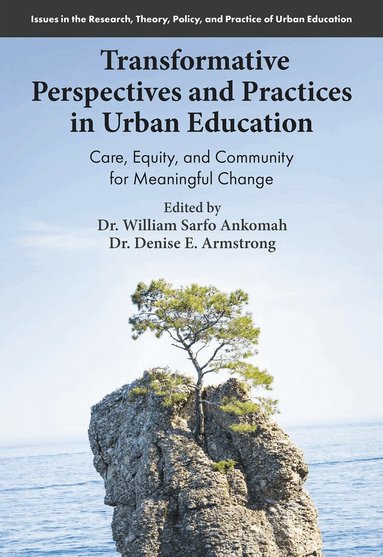
Transformative Perspectives and Practices in Urban Education
1 918 krhos Bokus · exkl. frakt
571 kr skillnad mellan billigaste och dyraste butik i lager
Dubbelkollat idag
Jämför 2 butiker
- Bokus, 1 918 kr, frakt enligt butiken. Till butik (öppnas i ny flik)
I lagerFrakt: se butikenDubbelkollad 22:51
1 918 kr
Lägst
- Akademibokhandeln, 2 489 kr, frakt enligt butiken. Till butik (öppnas i ny flik)
I lagerFrakt: se butikenDubbelkollad 22:53
2 489 kr

Priser från butikernas flöden kan ha ändrats: det är priset hos butiken som gäller, så kontrollera det innan du handlar.
Prishistorik
Köp nu eller vänta?
Pris idag
1 918 kr
- Lägst
- 1 346 kr
- Snitt
- 1 787 kr
- Högst
- 1 918 kr
| 2026-10-07 | 1 749 kr · Lägst hos Akademibokhandeln |
|---|---|
| 2026-10-08 | 1 346 kr · Lägst hos Bokus |
| 2026-10-10 | 1 918 kr · Lägst hos Bokus |
Om produkten
Transformative Perspectives and Practices in Urban Education
Läs merLäs mindre
Transformative Perspectives and Practices in Urban Education brings together a rich collection of research, reflections, and innovative practices aimed at advancing equity, leadership, pedagogy, and community engagement in urban educational contexts. Drawing on diverse geographic, cultural, and theoretical perspectives, the chapters offer a hopeful yet realistic vision for urban education across Canada, the United States, South Africa, and beyond. Grounded in themes of care, cultural responsiveness, and social justice, the volume opens with foundational insights into cultivating equitable classrooms through intentional pedagogies and relational teaching. It then moves into deeper explorations of visionary and culturally relevant leadership that supports systemic improvement in resource‐constrained and marginalized communities.Across the volume, contributors engage frameworks such as Appreciative Inquiry, Critical Race Theory, Ecological Systems Theory, and Systems Psychodynamics to illuminate the social, cultural, and psychological forces shaping urban schools. Collectively, the chapters shift the narrative from deficit-based views to perspectives that affirm life, hope, and possibility, even amid challenging conditions. They call for justice‐centered, collaborative, and community‐engaged approaches that position transformative urban education as culturally attuned and contextually responsive. This volume serves as a vital resource for scholars, educators, policymakers, and practitioners committed to reimagining and strengthening urban education. It offers insights and practical strategies that empower students, support educators, and help build more equitable and hopeful school communities.