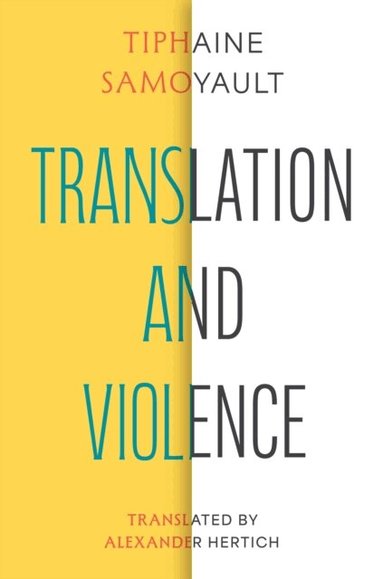
Translation and Violence
Dubbelkollat idag
Jämför 1 butik
- Bokus, 410 kr, frakt enligt butiken. Till butik (öppnas i ny flik)
I lagerFrakt: se butikenDubbelkollad 10:51
410 kr
Lägst

Priser från butikernas flöden kan ha ändrats: det är priset hos butiken som gäller, så kontrollera det innan du handlar.
Prishistorik
Köp nu eller vänta?
Just nu kostar produkten 410 kr — 8 kr över det lägsta vi sett på 2 veckor.
Pris idag
410 kr
- Lägst
- 402 kr
- Snitt
- 404 kr
- Högst
- 410 kr
| 2026-10-01 | 402 kr · Lägst hos Bokus |
|---|---|
| 2026-10-13 | 410 kr · Lägst hos Bokus |
Om produkten
Translation and Violence
Läs merLäs mindre
Rethinking the ethics and politics of translation in the age of AIThe rapid development of AI-powered translation tools is making translation more accessible than ever before, raising in a dramatic new way the old utopian promise of translationto allow transparent dialogue across linguistic barriers. But algorithmic translation brings great risks, including increasing inequalities in linguistic representation, reinforcing the dominance of a few languages, accelerating the disappearance of vulnerable languages, and even ostensibly eliminating the need to learn foreign languages. In Translation and Violence, Tiphaine Samoyault offers a provocative rethinking of the ethics and politics of translation in the age of AI. She shows how translation can be linguistically and politically violentbut also how it can be a means of resistance, justice, and reparation.The book examines links between translation and violence during European colonialism and South African apartheid, under totalitarian regimes, and in Nazi camps. It engages with numerous philosophers and translation theorists, among them Derrida, Berman, Meschonnic, Glissant, and Spivak. And it offers detailed analyses of important literary texts that illustrate the violences of translating, including works by Proust, Primo Levi, Celan, and Perec.Despite the violence that translation can do, Translation and Violence argues for a theory and practice of translation that can contribute to dialogue between cultures, literatures, and languages, and to the political possibility of creating a common world.