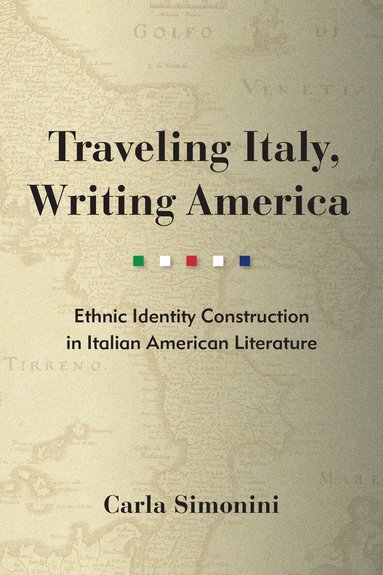
Traveling Italy, Writing America
1 851 krhos Bokus · exkl. frakt
558 kr skillnad mellan billigaste och dyraste butik i lager
Dubbelkollat idag
Jämför 2 butiker
- Bokus, 1 851 kr, frakt enligt butiken. Till butik (öppnas i ny flik)
I lagerFrakt: se butikenDubbelkollad 20:51
1 851 kr
Lägst
- Akademibokhandeln, 2 409 kr, frakt enligt butiken. Till butik (öppnas i ny flik)
I lagerFrakt: se butikenDubbelkollad 20:53
2 409 kr

Priser från butikernas flöden kan ha ändrats: det är priset hos butiken som gäller, så kontrollera det innan du handlar.
Prishistorik
Köp nu eller vänta?
Pris idag
1 851 kr
- Lägst
- 1 851 kr
- Snitt
- 1 931 kr
- Högst
- 2 409 kr
| 2026-10-11 | 2 409 kr · Lägst hos Akademibokhandeln |
|---|---|
| 2026-10-12 | 1 851 kr · Lägst hos Bokus |
Om produkten
Traveling Italy, Writing America
Läs merLäs mindre
Illuminates why Italy continues to captivate the American imagination, connecting classic literature to contemporary memoirs and popular media that still view Italy as a site of transformation, desire, and reflectionTraveling Italy, Writing America argues that the American idea of Italy, at once sunny and dark, refined and excessive, has played a crucial role in shaping both U.S. national identity and Italian American literary self-fashioning. The book shows how this idea was forged in nineteenth-century American travel writing and later reimagined by early Italian American authors as a means of claiming cultural legitimacy within the United States. Beginning with Margaret Fuller, Nathaniel Hawthorne, William Dean Howells, Mark Twain, and Henry James, the study demonstrates how Italy became a stage on which Americans rehearsed questions of taste, class, and national identity. It then turns to Antonio Arrighi, Pascal D'Angelo, and Giuseppe Cautela, showing how these writers appropriated familiar tropes of aesthetic ideal and passionate excess, recasting them as autoethnographic tools through which to assert Italian American subjectivity within a racialized literary marketplace. Rather than accepting a simple historical shift from Italophilia to Italophobia, the book reveals a persistent push-and-pull between attraction and repulsion, in which admiration and anxiety coexist and immigrant writers learn to work productively within that tension.The book's intervention is twofold. First, it relocates early Italian American literature from the margins of ""ethnic writing"" into the broader genealogy of American travel writing and U.S. literary history. Second, it reframes debates about cultural hierarchy and aesthetic value through the lens of autoethnography, showing how immigrant authors engaged, revised, and repurposed dominant cultural codes in order to make themselves legible within American culture. Extending the analysis to Julia Savarese's mid-century break with Italy as a validating reference and to contemporary memoirs of return, the book explains why Italy's enduring allure, combining aesthetic promise with cultural tension, continues to shape American literary and popular imagination.Traveling Italy, Writing America offers a new account of Italian American literary formation, demonstrating how the language of travel itself became a crucial medium through which ethnic identity, cultural authority, and literary belonging were negotiated in the United States.