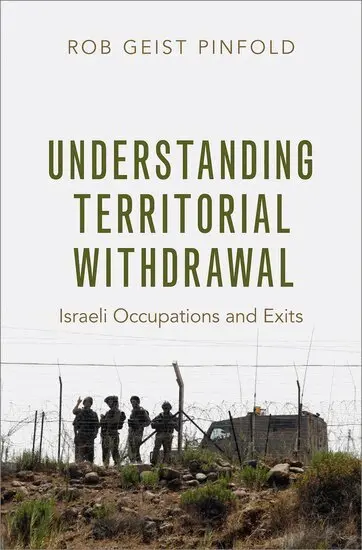
Understanding Territorial Withdrawal
- Vikt 0,6 kg
888 krhos Bokus · exkl. frakt
271 kr skillnad mellan billigaste och dyraste butik i lager
Dubbelkollat idag
Jämför 2 butiker
- Bokus, 888 kr, frakt enligt butiken. Till butik (öppnas i ny flik)
I lagerFrakt: se butikenDubbelkollad 05:51
888 kr
Lägst
- Akademibokhandeln, 1 159 kr, frakt enligt butiken. Till butik (öppnas i ny flik)
I lagerFrakt: se butikenDubbelkollad 04:53
1 159 kr

Priser från butikernas flöden kan ha ändrats: det är priset hos butiken som gäller, så kontrollera det innan du handlar.
Prishistorik
Köp nu eller vänta?
Just nu kostar produkten 888 kr — 28 kr över det lägsta vi sett på 1 månad.
Pris idag
888 kr
- Lägst
- 860 kr
- Snitt
- 876 kr
- Högst
- 888 kr
| 2026-09-15 | 860 kr · Lägst hos Bokus |
|---|---|
| 2026-10-05 | 888 kr · Lägst hos Bokus |
Om produkten
Understanding Territorial Withdrawal
Läs merLäs mindre
From Ukraine to Afghanistan and beyond, occupations and exit dilemmas permeate contemporary geopolitics. However, the existing literature on territorial conflict rarely scrutinizes a pivotal, related question: what makes a state withdraw from an occupied territory, or entrench itself within it?In Understanding Territorial Withdrawal, Rob Geist Pinfold addresses this research gap. He focuses primarily on Israel, a unique but important milieu that offers pertinent lessons for other states facing similar policy problems. As Pinfold demonstrates, occupiers choose to either perpetuate or abandon an occupation because of three factors: their relations with the occupied, interactions with third parties, and the occupier's domestic politics. He argues that each withdrawal is the culmination of a gradual process of policy re-assessment. Critically, it is a combination of local violence and international pressure that causes popular and elite opinion within the occupier to endorse an exit, rather than perpetuate the status quo. To affirm this pattern, Pinfold constructs a generalizable framework for understanding territorial withdrawal. He then applies this framework to multiple case studies, which include: Israel's withdrawal from the Sinai Peninsula between 1974-1982; its "unilateral" withdrawal from southern Lebanon in 2000; and its "unilateral disengagement" from the Gaza Strip in 2005, as well as Israel's non-withdrawals from the West Bank and Golan Heights. Overall, Understanding Territorial Withdrawal delineates commonalities that manifested in each exit yet were absent in the cases of occupation without exit. A powerful analysis of a central concern for the study of international security, territorial conflict, and the Arab-Israel conflict alike, this book provides a critical intervention that identifies why occupiers either retain, or leave, occupied territory.
Specifikationer
Fakta
- Vikt
- 0,6 kg
- GTIN
- 09780197658857
Uppgifter från tillverkare och butiker.