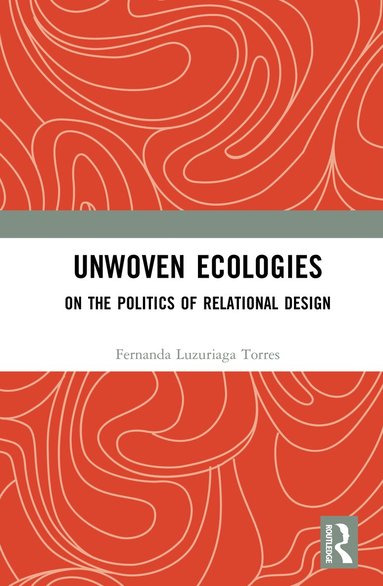
Unwoven Ecologies
Dubbelkollat idag
Jämför 2 butiker
- Bokus, 2 513 kr, frakt enligt butiken. Till butik (öppnas i ny flik)
I lagerFrakt: se butikenDubbelkollad 22:51
2 513 kr
Lägst
- Akademibokhandeln, 3 269 kr, frakt enligt butiken. Till butik (öppnas i ny flik)
Slut i lagerFrakt: se butikenDubbelkollad 22:53
3 269 kr

Priser från butikernas flöden kan ha ändrats: det är priset hos butiken som gäller, så kontrollera det innan du handlar.
Prishistorik
Köp nu eller vänta?
Just nu kostar produkten 2 513 kr — 49 kr över det lägsta vi sett på 4 veckor.
Under den tiden har det oftast legat runt 2 470–2 500 kr.
Pris idag
2 513 kr
- Lägst
- 2 464 kr
- Snitt
- 2 512 kr
- Högst
- 3 209 kr
| 2026-09-18 | 3 209 kr · Lägst hos Akademibokhandeln |
|---|---|
| 2026-09-19 | 2 466 kr · Lägst hos Bokus |
| 2026-09-21 | 2 470 kr · Lägst hos Bokus |
| 2026-09-23 | 2 473 kr · Lägst hos Bokus |
| 2026-09-25 | 2 466 kr · Lägst hos Bokus |
| 2026-09-27 | 2 464 kr · Lägst hos Bokus |
| 2026-09-30 | 2 468 kr · Lägst hos Bokus |
| 2026-10-02 | 2 484 kr · Lägst hos Bokus |
| 2026-10-03 | 2 486 kr · Lägst hos Bokus |
| 2026-10-04 | 2 496 kr · Lägst hos Bokus |
| 2026-10-05 | 2 498 kr · Lägst hos Bokus |
| 2026-10-08 | 2 523 kr · Lägst hos Bokus |
| 2026-10-10 | 2 520 kr · Lägst hos Bokus |
| 2026-10-11 | 2 512 kr · Lägst hos Bokus |
| 2026-10-12 | 2 504 kr · Lägst hos Bokus |
| 2026-10-16 | 2 513 kr · Lägst hos Bokus |
Om produkten
Unwoven Ecologies
Läs merLäs mindre
This book addresses the urgency of rethinking coexistence through urbanism. In the face of contemporary global crises, it argues that modern thought and its dichotomiesare insufficient to grasp current territorial conflicts. Instead, it proposes viewing coexistence as a field of friction among beings, knowledges, and economiesintertwined within a relational ecology, suggesting that these connections serve as the very point of departure for urbanism.Grounded in research from the Ecuadorian Amazon, the work situates local conflicts within global dynamics of the coloniality of power. Methodologically,it pairs socio-spatial analysis with the microhistories of Kichwa women, bringing to light living spatial configurations. Informed by cannibal thought and the bodyterritorycontinuum, these practices reframe urbanism as cosmic diplomacy and predation, while the ch'ixi framework offers a way to conceive coexistence withoutassimilation.Unwoven Ecologies: On the Politics of Relational Design is intended for scholars, postgraduate students, urban planners, and activists in political ecology and decolonialtheory who are seeking relational methodologies to foster resilient models of dwelling on Earth.